Your employees aren't leaving because of the paycheck; they're leaving because your organization has become a graveyard for their personal ambitions. You've likely felt the frustration of watching talented people transform into "zombie" employees who do the bare minimum while your culture feels increasingly sterile. Traditional engagement surveys won't fix a transactional environment. Real growth begins when you start investing in employee dreams as a core business strategy. It's time to stop treating personal aspirations as a distraction and start seeing them as the most valuable assets on your balance sheet.
We understand that helping staff buy a home, plan a wedding, or learn a new language feels like a philanthropic detour from the bottom line. However, the most successful organizations in 2026 are proving that this investment creates a loyal, high-performance workforce that attracts top-tier talent automatically. You'll learn why trading generic engagement for strategic dream management yields a massive cultural dividend. This guide explores the framework for myth-busting corporate apathy, the architecture of a dream-centric culture, and the path to turning individual fulfillment into organizational excellence.
Key Takeaways
- Identify the structural flaws in current engagement models that lead to a "dream-starved" workforce and learn how to bridge the gap between corporate goals and individual purpose.
- Shatter the fear-based myth that investing in employee dreams encourages turnover; instead, discover how supporting personal milestones creates an unbreakable bond of loyalty.
- Utilize the 12 Life Characteristics as a foundational framework to translate intangible human potential into tangible business results and holistic excellence.
- Implement a methodical approach to culture-building using the Dream Audit and the DreamCompass tool to align individual aspirations with organizational growth.
- Evolve into a visionary leader who navigates the complexities of the late 2020s by architecting a workplace that values the whole person over the mere professional.
Table of Contents
- The Great Disconnect: Why Traditional Engagement is Failing in 2026
- Myth-Busting: 'If I Help Them Achieve Their Dreams, They Will Leave'
- Beyond the Skills Gap: Personal Growth as a Strategic Asset
- Implementing the Strategy: How to Start Investing in Dreams
- The Future of Leadership: Becoming a Dream-Driven Organization
The Great Disconnect: Why Traditional Engagement is Failing in 2026
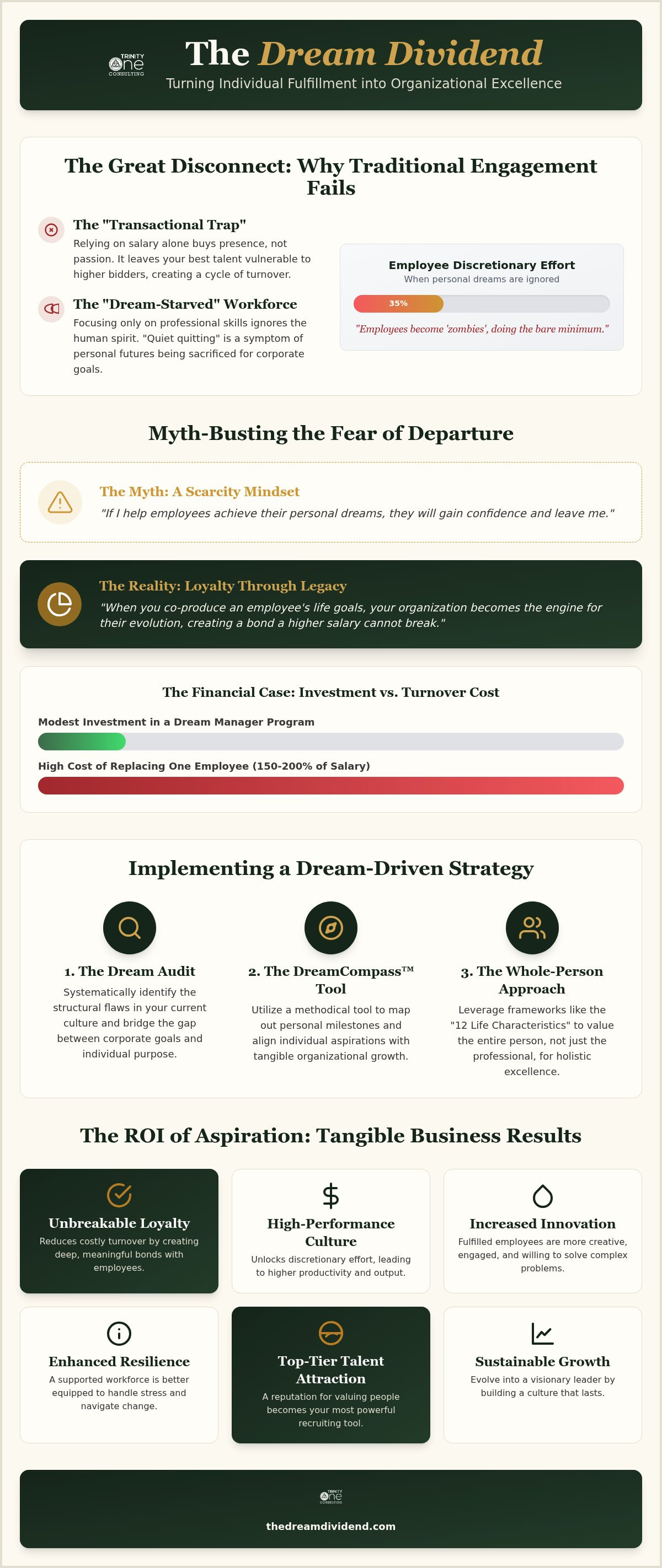
Traditional engagement strategies are crumbling under the weight of a fundamental misunderstanding. Most leaders still believe that "professional development" - teaching a new software suite or refining a sales technique - is the pinnacle of employee investment. It isn't. By 2026, the global workforce has matured beyond these shallow fixes. When you focus solely on technical skills, you ignore the internal engine that drives those skills: the human spirit. "Quiet quitting" is rarely a sign of laziness. It is the natural, defensive response of a dream-starved workforce. Employees stop giving discretionary effort when they realize their personal future is being sacrificed for a corporate quarterly report.
Falling into the "Transactional Trap" is a common strategic error. Many organizations believe that higher wages alone will solve retention issues, but capital cannot buy the same level of commitment as genuine care. Higher pay might buy physical presence, but it doesn't buy passion. If the relationship remains purely financial, your best people will always be vulnerable to a higher bidder. To break this cycle, you must start investing in employee dreams. This shift creates the Dream Dividend. It's the compounding value generated when a person becomes the best version of themselves while working within your organization, leading to higher levels of innovation, resilience, and output.
The Illusion of the Work-Life Divide
The idea that an employee can walk through your doors and leave their personal aspirations, fears, and stressors in the parking lot is a structural myth. In high-performance environments, the professional and personal selves are inextricably linked. If an employee is struggling with a personal goal or feels their life is stagnant, that weight leaks into their productivity, their creativity, and their collaboration. In 2026, the Whole Person approach to leadership defines an organization's success by its ability to integrate individual life-goals into the very architecture of its corporate strategy. You cannot have a high-performance culture built on the backs of unfulfilled people.
The ROI of Aspiration
Evolutionary leadership requires a transition from managing tasks to managing dreams. When you align a person's daily work with their long-term personal vision, you unlock a level of effort that no traditional management tool can manufacture. There is a direct psychological link between personal fulfillment and professional energy. This isn't a philanthropic distraction; it's a strategic asset. Organizations that leverage Dream Management Consulting are seeing the tangible returns of this cultural shift. By investing in employee dreams, you transform a sterile, transactional workplace into a vibrant community where loyalty is a natural byproduct of mutual growth.
Myth-Busting: 'If I Help Them Achieve Their Dreams, They Will Leave'
The most pervasive myth haunting modern leadership is the "Fear of Departure." Managers often worry that if they help an employee buy their first home, run a marathon, or finish a degree, that person will simply walk out the door with their newfound confidence. This scarcity mindset is a strategic relic. In reality, investing in employee dreams builds a foundation of Loyalty through Legacy. When an organization becomes the co-producer of an individual's life, the workplace is no longer just a place to collect a paycheck. It becomes the engine that powers their personal evolution, creating a bond that a competitor's signing bonus cannot break.
Consider the cold math of turnover. Replacing a mid-level employee often costs between 150% and 200% of their annual salary when you account for recruitment, onboarding, and lost productivity. Compare this to the modest investment of a Dream Manager program. By focusing on the person behind the desk, you aren't just preventing a resignation; you're securing a high-performance asset. You can explore how these strategies scale by visiting The Dream Dividend to see how vision translates into value. When you transform the workplace into a supportive partner in an employee's life, you stop being a temporary stop on their resume and start being a permanent part of their success story.
The Psychology of Reciprocity
Humans are biologically wired for reciprocity. When you take a genuine interest in someone’s personal aspirations, you create a psychological bond far stronger than any legal contract. We've seen organizations where retention soared after leaders began tracking personal milestones alongside professional KPIs. This shift in focus signals that the company values the individual's long-term well-being over immediate, transactional output. Graduating an employee to their ultimate dream is a profound organizational success, not a failure, because it proves your culture is a fertile ground for human excellence. This reputation for transformation becomes your greatest competitive advantage.
The Talent Magnet Effect
A dream-driven culture functions as an organic recruitment engine. In 2026, top-tier talent isn't looking for another "employer"; they're searching for "purpose-partners" who will help them navigate their personal and professional growth. When your current staff achieves personal wins, they become vocal brand ambassadors who reduce your recruitment costs through authentic word-of-mouth. You can hear more about these leadership shifts on The Dream Dividend Podcast, where we discuss the architecture of purpose-led growth. By investing in employee dreams, you create a culture that attracts elite performers who are hungry for more than just a title.
Beyond the Skills Gap: Personal Growth as a Strategic Asset
Many executives dismiss the idea of investing in employee dreams as a "soft" HR initiative with no measurable ROI. This perspective is a strategic blind spot. In a high-stakes business environment, the traditional focus on "Training" is often a band-aid for deeper engagement issues. Training focuses on skills, but transformation focuses on character. While skills can become obsolete, character is a permanent asset that compounds in value. When you help an employee achieve a personal goal, you aren't just checking a box; you're building the internal infrastructure of a high-performer.
Transformation is the most efficient engine for organizational health. A person who is winning in their personal life - whether that's achieving financial stability, improving their physical health, or mastering a new language - is objectively more likely to win at the office. They bring a sense of momentum and self-efficacy to their professional responsibilities that a technical manual simply cannot provide. By bridging the gap between personal fulfillment and professional performance, you turn your workforce into a collective of self-motivated leaders.
Character over Competence
The 12 Life Characteristics serve as a structural blueprint for this personal and professional excellence. These traits build the resilience, discipline, and reliability needed to navigate modern business challenges. When you prioritize character development, you create a culture where personal discipline at home naturally translates into professional reliability at work. Helping a team member master their personal habits is the most direct way to ensure they master their professional ones. Becoming the best version of yourself is the single most effective way to improve the organizational bottom line because it transforms every individual into a self-correcting engine of excellence.
The Dream Dividend Framework
The methodology developed by Floyd Consulting moves this concept from a high-level philosophy to a repeatable organizational habit. Based on the principles found in Matthew Kelly’s foundational text, "The Dream Manager," this framework empowers leaders to evolve beyond traditional management roles. The "Manager as Life Coach" is the next logical step in leadership evolution, focusing on the individual's growth as a prerequisite for the company's growth. This approach involves:
- Transitioning from task-oriented management to dream-oriented mentorship.
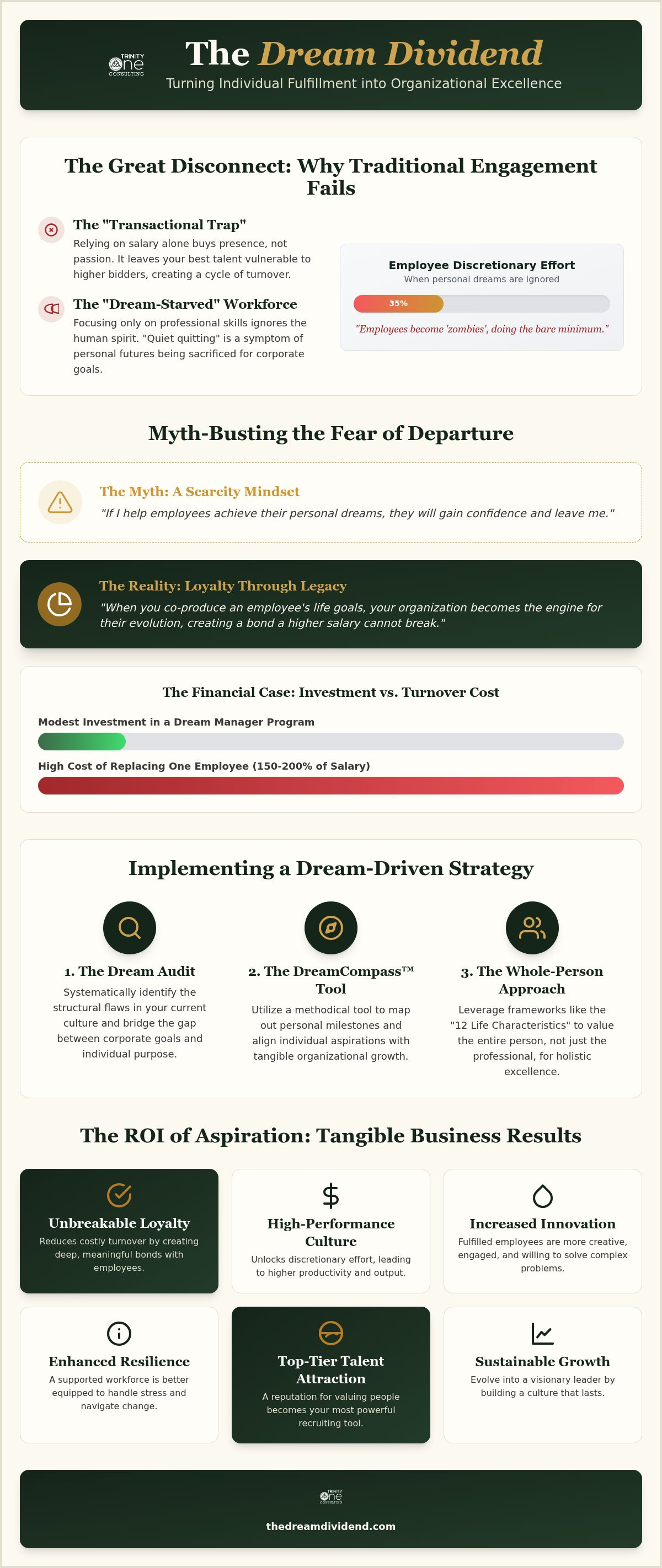
- Utilizing the proprietary DreamCompass Tool to track and support personal milestones.
- Establishing a rhythmic culture of accountability that values holistic well-being.
By adopting this framework, you stop managing tasks and start architecting a culture where people feel seen, supported, and challenged to grow. This is the strategic shift that separates the "zombie" workforce from the high-performance culture of the future.
Implementing the Strategy: How to Start Investing in Dreams
Moving from a philosophical commitment to a functional reality requires a structural shift in your leadership approach. You can't simply declare your support for personal growth; you must build the systems that facilitate it. The first step in investing in employee dreams is the Dream Audit. This diagnostic process involves identifying what your people actually want for their lives outside the office. Without this data, your engagement efforts are just guesswork. By auditing the aspirations of your team, you create a ledger of human potential that serves as the foundation for your cultural architecture.
Once you've identified these goals, you must integrate them into the rhythm of your business. This isn't a one-time event or a yearly check-in. It requires a consistent, methodical approach to tracking progress and providing support. You'll find that as employees see the company actively helping them achieve personal wins, their professional output reaches new heights. To see how this framework operates in a real-world environment, you can explore the resources at The Dream Dividend to begin your organizational transformation.
The DreamCompass Tool
The DreamCompass tool acts as the primary navigational instrument for this journey. It allows leaders and employees to map out coordinates for their personal and professional lives, ensuring that neither path is neglected. In a high-performance culture, we move away from the outdated annual review and toward quarterly "Dream Sessions." These sessions provide the space to recalibrate goals, identify obstacles, and celebrate milestones. Trust is the essential currency here. For the sharing process to be effective, employees must feel that their personal dreams are held in a vault of privacy and respect, rather than used as leverage for corporate gain.
Scaling with Certification
While external consulting provides the initial spark for change, internal certification provides the sustainable fuel. To truly scale a dream-driven culture, you need a Certified Dream Manager within your own ranks. These individuals are the strategic architects of your internal community. They're often already hiding in your leadership team, acting as natural mentors and compassionate guides. By formalizing their role, you empower them to maintain the momentum of the program long after the initial implementation phase. For a deeper look at the logistics of this process, read our guide on How to Implement a Dream Manager Program. This internal scaling ensures that investing in employee dreams becomes a permanent part of your company's DNA rather than a temporary initiative.
The Future of Leadership: Becoming a Dream-Driven Organization
The competitive landscape of the late 2020s has rendered traditional, sterile management models obsolete. To thrive, leaders must shed the coldness of transactional leadership and embrace the role of the strategic architect. Humanizing the workplace is no longer a luxury; it's the primary differentiator for organizations that want to capture and keep elite talent. When you commit to investing in employee dreams, you aren't just improving morale. You're building a culture that functions as a high-performance engine, fueled by the genuine aspirations of your people. This is the legacy of a modern leader: building an organization where profits are the natural byproduct of people becoming their best selves.
Audit your current culture against the Dream Dividend framework to identify where potential is being lost. If your environment feels transactional, your results will remain stagnant. If your culture feels like a graveyard for ambition, your best people will eventually find a new home. Moving beyond the "sterile coldness" of the past requires the courage to see your employees as whole individuals with lives that matter beyond their job descriptions. By aligning their personal success with your organizational goals, you create a symbiotic relationship that drives long-term sustainability and excellence.
Calculated Optimism as a Strategy
Framing a dream-driven initiative to skeptical stakeholders requires a shift into the language of investment. You aren't "spending" on hobbies; you're allocating capital to the most volatile and valuable asset in your portfolio: human potential. Think of it as compounding interest on character. If you help an employee achieve personal stability, you reduce their cognitive load, increase their focus, and deepen their loyalty. This calculated optimism balances visionary aspiration with pragmatic business results, proving that the best version of your company always starts with the best version of your people.
Your Path to the Dream Dividend
The journey toward becoming a dream-driven organization begins with a clear-eyed assessment of your current cultural foundations. You must audit your environment to see where aspirations are being stifled and where they can be amplified. Whether you engage with Dream Management Consulting for a comprehensive cultural audit or begin the roadmap to becoming a Certified Dream Manager, the time to act is now. Don't let your organization remain a graveyard for ambition. Take the first step toward architecting a future where every team member is an active participant in their own success and yours. It's time to transform your organization with The Dream Dividend and secure the high-performance culture your business deserves.
Architecting Your Cultural Legacy
The era of treating employees as interchangeable units is over. You now understand that the most resilient organizations are built by leaders who prioritize human potential over transactional output. By investing in employee dreams, you transform the workplace from a sterile environment into a vibrant community where loyalty, performance, and innovation are the natural returns. We've debunked the myth of the "fear of departure" and replaced it with a strategic framework for long-term growth.
Our methodology isn't based on vague inspiration; it's rooted in the proven principles of Matthew Kelly’s "The Dream Manager" and the proprietary DreamCompass methodology. Led by Kevin Patrick, a Certified Dream Manager, we provide the architectural tools needed to scale this culture within your unique organization. You've seen the roadmap: audit your current culture, deploy tracking systems, and empower internal leaders to guide the way. The best version of your company is waiting to be unlocked. It's time to trade the exhaustion of high turnover for the sustainable energy of an inspired workforce. Start your journey toward a high-performance culture with The Dream Dividend. Your people are ready to grow; you only need to provide the foundation.
Frequently Asked Questions
What is the 'Dream Dividend' exactly?
The Dream Dividend is the tangible, compounding return an organization receives when it prioritizes the personal aspirations of its people. It isn't a vague feeling of happiness; it's a strategic asset that manifests as lower turnover, reduced recruitment costs, and heightened discretionary effort. By investing in employee dreams, you move beyond the sterile metrics of traditional engagement and unlock a reservoir of human potential that pays out in long-term organizational health.
Does investing in employee dreams replace traditional benefits?
No, this framework serves as a strategic multiplier rather than a replacement for competitive compensation and health benefits. Think of traditional benefits as the necessary foundation and dream management as the high-growth architecture built upon it. While fair pay ensures an employee shows up, supporting their personal milestones ensures they bring their best version to every challenge. It transforms a transactional relationship into a transformational partnership.
What if an employee's dream is to work for a competitor?
This is a common fear, but the reality is that most personal dreams involve home ownership, family milestones, or physical achievements like running a marathon. If an employee's dream is professional growth, a dream-driven culture allows you to identify that ambition early and architect a path for them within your own organization. It's far better to have a high-performer who eventually "graduates" to a new role than a disengaged "zombie" who stays and drains your culture.
How do we measure the ROI of a Dream Manager program?
You measure success through the "Dream Dividend," which tracks hard metrics like attrition rates, internal promotion speed, and recruitment savings. When investing in employee dreams, organizations often see a direct correlation between personal goal attainment and professional productivity. By reducing the "zombie" workforce and fostering a culture of loyalty, the program pays for itself through the elimination of the hidden costs associated with a disengaged staff.
How much time does dream management take away from daily tasks?
The time investment is minimal when compared to the massive gains in focus and efficiency. We recommend a rhythmic approach of quarterly "Dream Sessions" rather than daily interruptions. This small allocation of time functions as a high-leverage activity; it clears the cognitive load of personal stress and allows employees to work with a sense of purpose. An hour of strategic mentorship can often unlock weeks of peak performance and creative problem-solving.
Is the Dream Manager program suitable for small businesses?
Small businesses often see the fastest results because their cultures are agile and their leaders are more accessible. In a lean environment, the impact of a single high-performer is magnified, making the Dream Manager framework a vital tool for competing against larger corporations. It allows a small firm to offer a level of personal investment and mentorship that big-budget competitors simply cannot replicate, turning your culture into a talent magnet.
How does the DreamCompass tool differ from standard goal-setting software?
Most software is designed to track corporate KPIs and professional quotas; the DreamCompass tool is designed to navigate the whole person. It utilizes the 12 Life Characteristics to ensure that personal growth is balanced and sustainable. Instead of just tracking sales targets, it maps out a comprehensive life plan that includes financial health, physical vitality, and personal relationships. It acts as a navigational guide for the individual's entire life journey.
Can any manager become a Certified Dream Manager?
Any leader with a genuine commitment to human excellence and a desire to evolve beyond traditional management can pursue certification. The process requires a shift from a command-and-control mindset to one of high-stakes mentorship and strategic architecture. The program provides the structural foundations, the coaching methodology, and the practical tools needed to help your people become the best versions of themselves while driving the success of the organization.