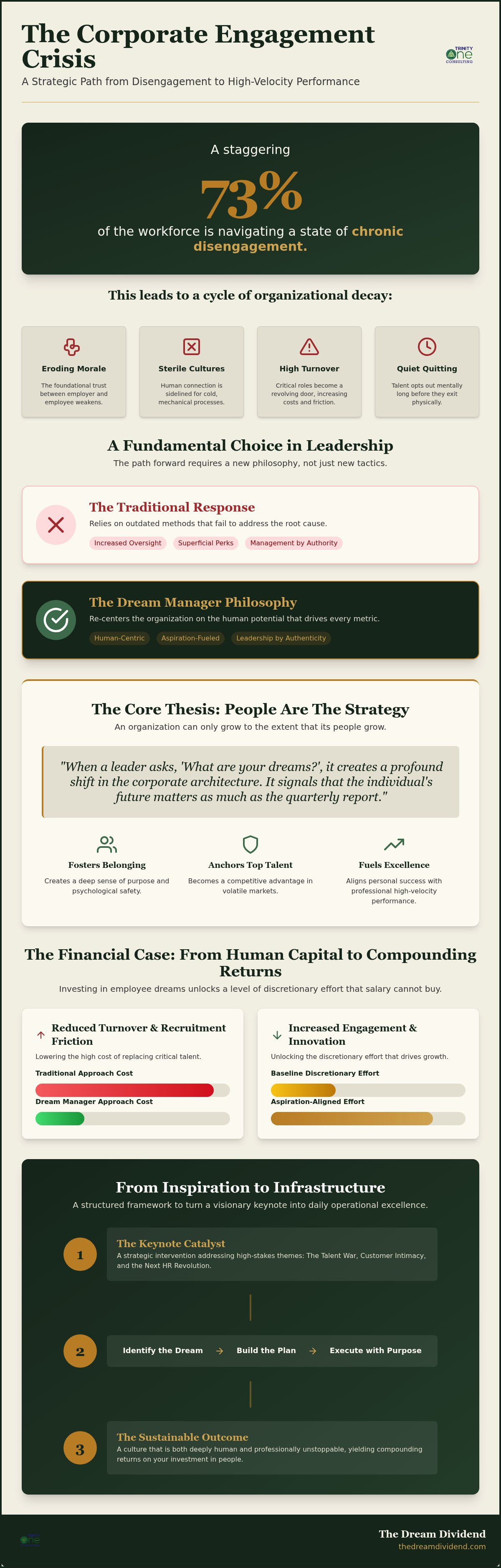
With 73% of the workforce currently navigating a state of chronic disengagement, the standard corporate response of increased oversight or superficial perks often fails to address the underlying erosion of morale. You've likely witnessed the results in sterile cultures where human connection is sidelined, leading to the high cost of turnover in your most critical roles. A Matthew Kelly Dream Manager keynote acts as a strategic catalyst for this specific crisis, re-centering the organization on the human potential that drives every metric. It's an invitation to move beyond the cold mechanics of traditional management and toward a model where personal aspiration becomes a vital, compounding asset.
You know that the health of your company is inextricably linked to the well-being of your people, yet translating that philosophy into a functional roadmap requires a proven framework. This article explores how the Dream Manager methodology turns individual dreams into organizational ROI, offering a clear path from quiet quitting to high-velocity performance. We'll examine the structural foundations of this approach, provide tangible proof of its impact, and outline how to implement these insights within your own leadership strategy. By the end, you'll see exactly how a focus on the whole person creates a culture that is both deeply human and professionally unstoppable.
Key Takeaways
- Recognize how the "Best Version of Yourself" philosophy creates a direct link between your team's personal aspirations and your company's long-term health.
- Leverage a Matthew Kelly Dream Manager keynote as a strategic intervention to solve the 2026 engagement crisis and move beyond the sterile limits of traditional management.
- Transition from a one-time event to a sustainable culture by adopting a structured framework that turns visionary ideas into daily operational excellence.
- Build a rigorous financial case for human-centric leadership by calculating the specific ROI found in reduced turnover and lower recruitment friction.
- Access ongoing mentorship and strategic tools like the Dream Dividend Podcast to ensure your investment in human capital continues to yield compounding returns.
Table of Contents
- The Anatomy of a Matthew Kelly Dream Manager Keynote
- Why the Dream Manager Philosophy Solves the 2026 Engagement Crisis
- From Inspiration to Infrastructure: Bridging the Gap Between Talk and Transformation
- The Financial Case: Calculating the ROI of Investing in Employee Dreams
- Implementing the Dream Manager Framework with The Dream Dividend
The Anatomy of a Matthew Kelly Dream Manager Keynote
A Matthew Kelly Dream Manager keynote isn't a typical corporate presentation; it's a structural realignment of the employer-employee relationship. It begins with the fundamental realization that an organization can only grow to the extent that its people grow. Kelly introduces the "Best Version of Yourself" framework, a core philosophy that treats personal development as a strategic asset rather than a side project. By shifting the narrative from management by authority to leadership by authenticity, the keynote addresses the psychological roots of employee engagement. This transition is critical in an era where talent is the primary differentiator and sterile corporate cultures no longer suffice.
The session navigates three high-stakes themes: the escalating Talent War, the necessity of Customer Intimacy, and the dawn of the Next HR Revolution. Kelly frames these not as abstract challenges, but as opportunities to secure a competitive advantage through human capital. The "Dream" catalyst serves as the engine for this change. Personal aspiration is the most powerful motivator in human history, and when a company aligns its goals with the individual dreams of its staff, it triggers a level of commitment that traditional incentives cannot match. It's a method that moves beyond superficial fixes to address the foundational health of the organization.
The Core Thesis: People are the Strategy
Successful organizations recognize that their people are not just resources to be managed, but the very foundation of their strategy. When a leader asks, "What are your dreams?", it creates a profound shift in the corporate architecture. It signals that the individual's future matters as much as the quarterly report. This simple question fosters a sense of belonging and purpose that anchors top talent even in volatile markets. The Dream Manager acts as a strategic architect of human potential, building a culture where personal success fuels professional excellence.
Keynote Delivery Style: High-Stakes Mentorship
The delivery balances visionary aspiration with pragmatic business strategy, creating an atmosphere of high-stakes mentorship. A Matthew Kelly Dream Manager keynote uses rhythmic tricolons and punchy imperatives to drive momentum: identify the dream, build the plan, execute with purpose. This style ensures the message is both deeply personal and professionally rigorous. By integrating "Rhythm of Life" principles into a corporate setting, the keynote provides a grounded, multi-dimensional perspective on holistic well-being. It moves the audience from passive listening to active transformation, ensuring the insights lead to sustainable, long-term growth and a tangible return on investment.
Why the Dream Manager Philosophy Solves the 2026 Engagement Crisis
The 2026 corporate environment presents a stark paradox. As AI automates technical proficiency, the value of human aspiration increases exponentially. Organizations currently face a 73% disengagement rate, a figure that represents more than lost productivity; it signals a total erosion of the employee-employer contract. A Matthew Kelly Dream Manager keynote serves as the strategic intervention required to rebuild this foundation. If you continue to rely on sterile management tactics, you'll find your best talent opting for "Quiet Quitting" or exiting entirely.
Human-centered leadership is no longer a luxury for high-growth firms. It's a competitive necessity. The shift from backward-looking performance reviews to forward-looking "Whole Person Development" creates a culture where employees feel seen, valued, and supported. There is a compelling financial case for investing in employees that transcends simple retention. When an organization acts as a vehicle for its people's dreams, it unlocks a level of discretionary effort that no salary increase can buy. It's an investment that pays dividends in loyalty, innovation, and long-term stability.
Beyond the Daily Grind: Finding Meaning in 2026
In a remote-first world, the lack of physical connection often leads to a sense of isolation and burnout. Linking individual contributions to a larger organizational mission is the only way to sustain momentum. The workplace purpose podcast explores these themes in depth, showing how leaders can use the 12 Life Characteristics to provide a holistic support system for their teams. This framework acts as a structural foundation, ensuring that employees don't just survive the grind but thrive within it. It's about building a workplace where purpose isn't just a poster on the wall; it's the air everyone breathes.
The New Retention Strategy: Investing in Dreams
Traditional benefits like health insurance and 401(k) plans are now baseline requirements, not differentiators. To win the Talent War, you must offer something deeper: an investment in the individual's future. This is the essence of the Dream Dividend. It is the compounding return on personal growth that manifests as reduced turnover and lower recruitment friction. A Matthew Kelly Dream Manager keynote initiates this vital culture shift, providing the spark that turns a group of workers into a community of dreamers. To begin architecting this transformation, explore how The Dream Dividend can guide your strategic implementation.
From Inspiration to Infrastructure: Bridging the Gap Between Talk and Transformation
Most corporate events suffer from the "Monday Morning" problem. The excitement of a speaker's message often evaporates the moment employees return to their desks and face the weight of their inbox. A Matthew Kelly Dream Manager keynote is designed to bypass this cycle by serving as a strategic catalyst for permanent infrastructure. It is not merely a speech; it is the entry point for a comprehensive Dream Manager framework that acts as an operational blueprint for your entire firm. By utilizing the DreamCompass tool, organizations can move beyond vague sentiments and begin turning abstract dreams into trackable, measurable goals. This transition from a single keynote event to a long-term Dream Management Consulting engagement ensures that the vision of a purpose-driven workplace becomes a permanent part of your corporate architecture.
The Strategic Implementation Roadmap
Success in this transition depends on a methodical roadmap that moves from philosophical alignment to practical execution. The journey begins with the keynote as the "Cultural Spark," a high-impact moment that challenges the status quo and introduces the possibility of a different workplace reality. Once the spark is lit, the focus shifts to identifying internal leaders for certification, ensuring that the message has a local, authentic voice. The final stage involves deploying the DreamCompass across the leadership team, creating a shared language for growth and accountability. This three-step process, ignite, identify, and implement, provides the steady rhythm necessary for sustainable change.
Scaling the Message: The Certified Dream Manager
Scaling this message across a mid-size organization requires more than just top-down directives. It demands a Certified Dream Manager who can act as a seasoned mentor and strategic guide. This role is essential for turning managers into "life coaches" who are equipped to handle the complexities of their direct reports' aspirations. When leadership invests in this level of internal coaching, they ensure the "Dream Dividend" continues to compound even after the speaker leaves the stage. By focusing on the whole person, managers create a culture of high-stakes mentorship where employees feel supported in every dimension of their lives. This approach effectively bridges the gap between personal fulfillment and professional performance, leading to a logical and inspiring conclusion for both the individual and the company.
The Financial Case: Calculating the ROI of Investing in Employee Dreams
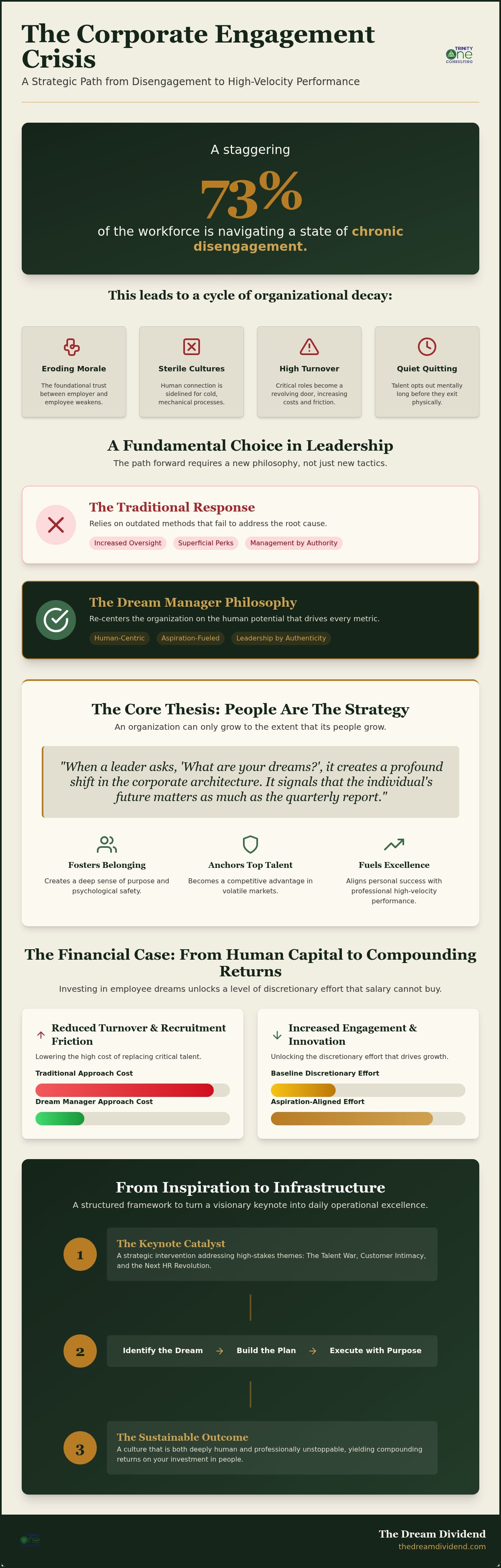
Disengagement is not merely a morale issue; it's a profound balance sheet liability. When 73% of your workforce feels disconnected, your organization pays a silent "disengagement tax" every single day. A Matthew Kelly Dream Manager keynote re-centers the conversation on human capital as a strategic asset rather than a line-item expense. It's the first step in moving from a culture of attrition to one of high-yield aspiration. By utilizing the Dream Manager ROI framework, leadership can finally quantify the value of personal growth and justify the investment in their people's future.
The financial impact of this shift is both direct and compounding. Direct ROI manifests through the immediate reduction in turnover costs and recruitment friction. Indirectly, the organization gains through increased productivity, heightened innovation, and deeper customer intimacy. If you treat your employees' dreams as a core part of the business strategy, you create a workforce that is innovative, loyal, and highly productive. This isn't just soft-skills training; it's a pragmatic approach to maximizing the return on your most expensive investment.
The Turnover Tax vs. The Dream Dividend
Losing a high-performing employee in 2026 is a financial catastrophe. It's a drain on resources. It's a blow to team momentum. According to SHRM, the cost to replace an individual can reach three to four times their annual salary when factoring in recruitment, onboarding, and lost productivity. Mapping employee dreams acts as a structural defense against this loss. While traditional management focuses on what an employee can do for the company, the Dream Manager framework asks what the company can do for the employee. By building a "Best Version" culture, you replace the turnover tax with a compounding dividend of loyalty. This creates a sustainable advantage that competitors simply cannot replicate through salary alone.
Pragmatic Business Strategy: Human Potential as an Asset
Framing personal development as a structural foundation for business growth is essential for long-term health. There is a direct relationship between employee fulfillment and customer satisfaction; fulfilled people treat customers better. A Matthew Kelly Dream Manager keynote provides the navigation tools to align these two forces. The Dream Dividend is the measurable excess value generated by an engaged workforce. It represents the discretionary effort that employees give when they feel their personal goals are supported by their professional environment. To begin calculating your own potential returns, consult with our strategic architects today and move beyond the status quo.
Implementing the Dream Manager Framework with The Dream Dividend
A Matthew Kelly Dream Manager keynote provides the visionary spark, but the true value lies in the rigorous implementation that follows. The Dream Dividend acts as the essential bridge, translating high-level inspiration into the daily mechanics of your operations. We move beyond the stage to help you architect a culture where personal growth is the primary driver of business success. By integrating these principles into your existing workflows, you ensure that the momentum generated during the keynote doesn't just fade; it compounds over time, creating a sustainable foundation for organizational excellence.
Sustaining this transformation requires a commitment to continuous learning and reflection. The Dream Dividend Podcast serves as a vital resource in this regard, offering ongoing insights from leaders who have successfully navigated this human-centric shift. This isn't a one-size-fits-all solution. We work with you to customize the 12 Life Characteristics, ensuring the framework resonates with your unique organizational culture and addresses your specific challenges. This tailored approach allows you to turn abstract concepts into practical, lived experiences for every member of your team.
A Holistic Approach to Leadership Excellence
Leadership excellence in the modern era requires a multi-dimensional strategy. There is a powerful synergy between the high-impact Matthew Kelly Dream Manager keynote and the deep-dive exploration found in leadership development podcasts. While the keynote aligns the vision, these resources provide the steady cadence of mentorship needed to sustain change. Utilizing the DreamCompass tool, your team can track personal and professional goals with the same precision you apply to financial KPIs. This process is guided by Kevin Patrick and the team at Trinity One Consulting, providing the "Wise Mentor" perspective that helps your leadership team evolve beyond traditional management styles.
Your Journey to the Best Version of Your Organization
The invitation is simple yet profound: stop managing performance and start managing dreams. In 2026, the organizations that thrive will be those that recognize their people's aspirations as their greatest competitive advantage. It's time to move beyond superficial fixes and sterile corporate consulting. By choosing to invest in the whole person, you aren't just improving retention; you're architecting a future of limitless potential. The path from inspiration to ROI is clear, structured, and achievable. Schedule a consultation to bring the Dream Manager vision to your team and begin the journey toward becoming the best version of your organization today.
Architecting a Culture of Compounding Aspiration
The shift from traditional management to a purpose-driven workplace isn't just a cultural preference; it's a strategic necessity for the 2026 economy. By utilizing a Matthew Kelly Dream Manager keynote as your initial catalyst, you ignite a transformation that redefines the relationship between your organization and its people. You've seen how this framework turns personal dreams into measurable business dividends, slashing turnover, increasing productivity, and fostering customer intimacy. Success requires moving beyond the initial inspiration to build a permanent infrastructure for growth.
Led by Kevin Patrick, a Certified Dream Manager, our team acts as your strategic partner in organizational culture transformation. We provide the ROI-driven framework and navigation tools like the DreamCompass to ensure your investment in human capital delivers long-term value. It's time to stop managing performance through authority and start leading with authenticity. Unlock your organization's potential with Dream Management Consulting and discover the sustainable growth that comes from helping your people become the best version of themselves. The future of your organization depends on the dreams of your people; it's time to start building it together.
Frequently Asked Questions
What is a Dream Manager keynote, and how does it differ from traditional motivational speaking?
A Matthew Kelly Dream Manager keynote differs from traditional motivational speaking by providing a structural blueprint rather than a temporary emotional high. While standard speeches focus on generic inspiration, this keynote introduces a specific framework that connects an employee's personal aspirations to the organization's strategic goals. It functions as a catalyst for long-term cultural transformation, moving beyond the stage to address the root causes of disengagement and turnover in the modern workforce.
How much does it cost to implement a Dream Manager program after a keynote?
Implementation costs vary depending on the specific model your organization selects. You can choose a managed service where external consultants facilitate the program for your team, or you can invest in the certification of internal leaders to host the program in-house. These options allow for scalability based on your company's size and current engagement needs. Each path is designed to provide a compounding return by addressing the high financial costs of employee turnover.
Can the Dream Manager framework work for remote or hybrid teams in 2026?
The framework is exceptionally effective for remote and hybrid teams in 2026 because it prioritizes human connection over physical presence. Digital tools like the DreamCompass facilitate asynchronous tracking of personal and professional goals, ensuring that distributed employees feel seen and supported. By focusing on the whole person, leaders can combat the isolation often found in remote work, replacing sterile digital interactions with meaningful, aspiration-based mentorship that keeps teams aligned and motivated.
What are the 12 Life Characteristics mentioned in Matthew Kelly's work?
The 12 Life Characteristics represent a holistic map for personal and professional excellence. They include categories such as physical health, emotional well-being, intellectual growth, and spiritual vitality. By addressing these specific areas, the program helps individuals become the best version of themselves in every dimension of life. This comprehensive approach ensures that development isn't limited to workplace skills, but extends to the foundational habits that prevent burnout and sustain long-term high performance.
How do you measure the ROI of a Dream Manager program?
Measuring the ROI involves tracking both direct and indirect financial metrics. Direct returns are calculated by measuring the reduction in turnover rates and the associated savings in recruitment and onboarding costs. Indirect ROI is observed through increased productivity, higher levels of discretionary effort, and improved customer satisfaction scores. By using the Dream Manager ROI framework, organizations can quantify the excess value generated when personal aspirations are aligned with the company's strategic objectives.
Is the Dream Manager concept applicable to small businesses or only large corporations?
The concept is highly applicable to organizations of all sizes, from small businesses to global corporations. In smaller teams, the framework often yields faster results due to the closer proximity between leadership and staff. For larger entities, it provides the necessary infrastructure to maintain a human-centric culture across multiple departments. Whether you are managing ten people or ten thousand, the fundamental principle remains the same: helping your people achieve their dreams creates a more loyal and productive workforce.
What is the DreamCompass tool and how is it used during a keynote?
The DreamCompass is a strategic navigation tool used to identify, prioritize, and track personal and professional goals. During a Matthew Kelly Dream Manager keynote, it serves as the practical bridge between visionary ideas and daily action. It moves the conversation from abstract inspiration to concrete data, allowing employees to map out their aspirations in a structured format. This tool ensures that the momentum from the keynote translates into a trackable roadmap for long-term individual and organizational growth.
How can a manager become a Certified Dream Manager?
Leaders become a Certified Dream Manager by completing a specialized training program based on Floyd Consulting methodologies. This certification equips participants with the coaching frameworks and structural tools needed to lead the program within their own organizations. It includes training on the 12 Life Characteristics and the DreamCompass tool, followed by a period of ongoing mentorship. This internal expertise ensures that the culture of aspiration remains a permanent asset that continues to yield business dividends year after year.