What if the most valuable asset on your balance sheet isn't your intellectual property, but the unexpressed dreams of your people? You've likely watched your budget sink into unused meditation apps, generic wellness days, and uninspiring office perks, yet employee burnout continues to climb. It's a common struggle to bridge the gap between corporate performance and genuine human fulfillment. To solve this, leadership must evolve. Building effective holistic employee wellness programs requires moving beyond superficial fixes to address the whole person. When you invest in an individual's internal growth, you secure their external commitment.
This guide provides a strategic roadmap to transcend traditional health benefits. You'll discover how to build a framework that aligns personal aspirations with organizational excellence, turning wellness into a compounding competitive advantage. We'll examine how the Dream Manager framework and the 12 Life Characteristics create a culture where employees feel truly seen. By the end of this article, you'll have the tools to increase retention, spark engagement, and realize the true dividend of a thriving workforce.
Key Takeaways
- Shift your focus from surface-level perks to a unified architecture that integrates physical, mental, and aspirational health for long-term value.
- Understand why traditional wellness fails when it only targets absenteeism, and learn how personalized aspiration mapping fuels genuine passion.
- Discover how the DreamCompass tool and the 12 Life Characteristics framework provide a structured foundation for personal growth and organizational excellence.
- Learn how to implement holistic employee wellness programs that leverage a Certified Dream Manager to turn human potential into a compounding competitive advantage.
- Gain a clear roadmap for evolving your management style from a traditional supervisor to a strategic mentor who champions the whole person.
Table of Contents
- Beyond the Gym: The Evolution of Holistic Employee Wellness in 2026
- The 6 Pillars of a Truly Holistic Wellness Program
- Traditional Wellness vs. Dream Management: A Strategic Comparison
- How to Implement a Holistic Framework: The DreamCompass Method
- The Catalyst: Why Every Company Needs a Certified Dream Manager
Beyond the Gym: The Evolution of Holistic Employee Wellness in 2026
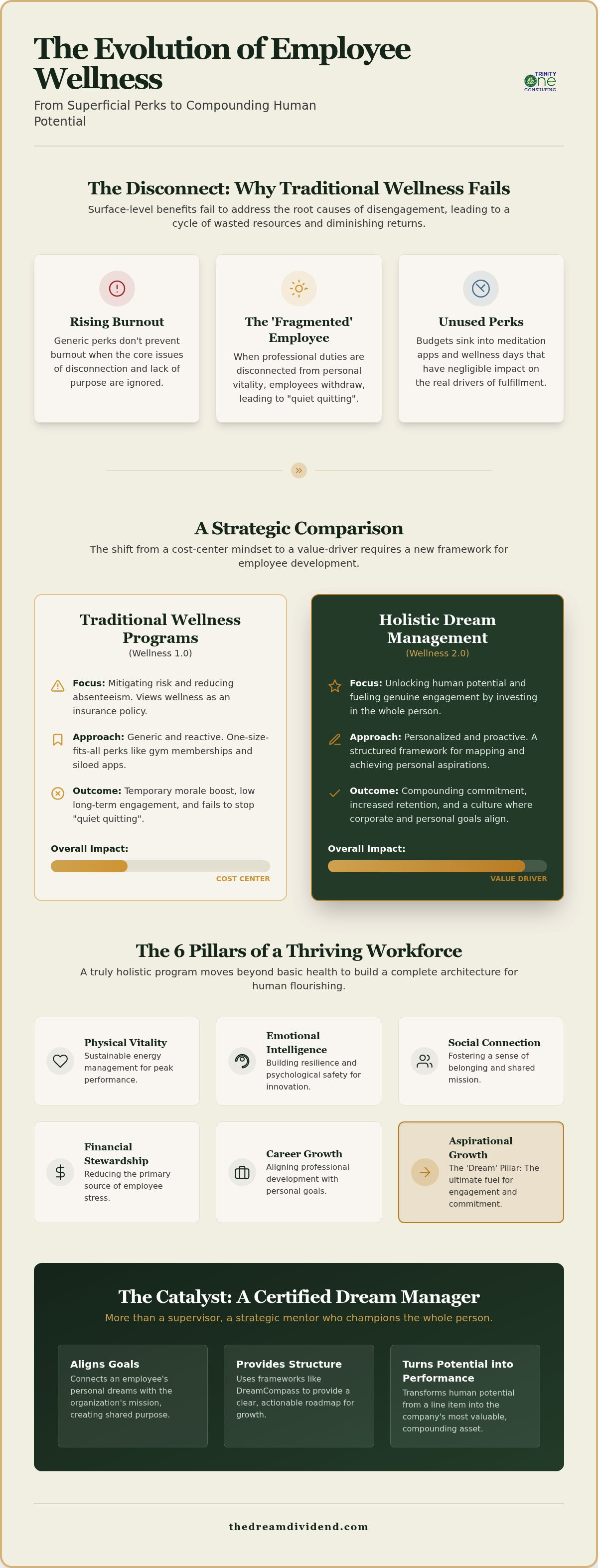
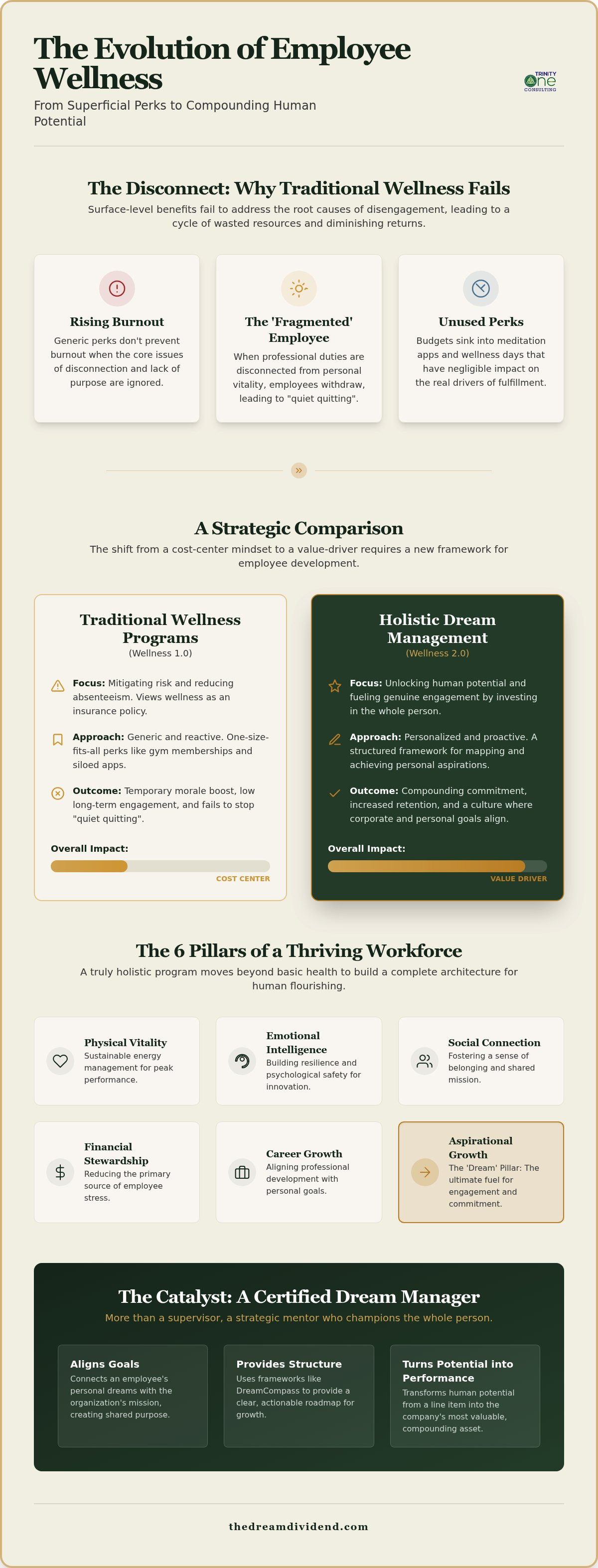
The definition of health in the workplace is undergoing a seismic shift. For decades, companies viewed wellness through a narrow lens of physical safety and basic insurance coverage. We're now witnessing a transition from Wellness 1.0, focused on reactive care, to Wellness 2.0, which prioritizes the whole person. Modern holistic employee wellness programs must integrate physical, mental, and aspirational health into a single, cohesive framework. When benefits remain siloed, such as offering a standalone meditation app without addressing the underlying causes of burnout, the impact is negligible. True growth requires a more robust architecture. The evolution of workplace wellness shows that programs are no longer just about reducing insurance premiums; they're about expanding human capacity. Holistic wellness is the strategic alignment of a company's mission with an employee's personal aspirations.
The Crisis of the 'Fragmented' Employee
A fragmented employee is one whose professional duties are disconnected from their personal vitality. When workplace stress paralyzes personal growth, the individual begins to withdraw. This disconnection is the root of quiet quitting, a clear symptom of a dream-starved culture where people feel their future is being traded for a paycheck. Ignoring an employee’s life outside the 9-to-5 carries a hidden cost. It erodes trust. It stifles innovation. It creates a workforce that is emotionally bankrupt.
The ROI of the Whole Person
Personal growth is not a luxury; it's a strategic asset that yields a significant dividend. Think of human potential as a form of capital. When you invest in an individual's internal growth, that investment compounds over time. This shift moves wellness from a cost center on the balance sheet to a primary value driver. By focusing on the whole person, leadership facilitates an organizational culture transformation that turns retention into a competitive advantage. This is why holistic employee wellness programs are the new standard for elite organizations. It's about building a foundation where personal dreams and corporate goals don't just coexist; they accelerate one another.
The 6 Pillars of a Truly Holistic Wellness Program
Building holistic employee wellness programs requires a structural shift in how we view human potential. While most corporate initiatives stall at basic health maintenance, a truly comprehensive strategy addresses the person as a whole. We identify six fundamental pillars that form the architecture of a thriving employee: Physical Vitality, Emotional Intelligence, Social Connection, Financial Stewardship, and Aspirational Growth. Each pillar supports the others. For example, Physical Vitality is no longer just about step counts; it’s about sustainable energy management. Emotional Intelligence focuses on building the resilience and psychological safety required for innovation. Social Connection ensures a sense of belonging and a shared mission. Financial Stewardship directly reduces the primary source of employee stress. Without the final pillar of Aspirational Growth, the others lack a clear direction.
Introducing the 'Dream' Pillar
Dreams are the ultimate fuel for engagement. When a company helps an employee map their personal dreams, it creates a powerful psychological bond that slashes turnover. This is the essence of the Dream Dividend. By integrating the dream manager framework into daily wellness, you transform the workplace from a site of labor into a platform for personal achievement. It turns the "job" into a vehicle for the employee's future. This alignment creates a culture of high-stakes mentorship where leadership invests in the individual's long-term value. If you're ready to explore this deeper, you can listen to The Dream Dividend Podcast for real-world applications of this philosophy.
The 12 Life Characteristics Framework
The 12 Life Characteristics provide the blueprint for this excellence. This framework acts as a balanced scorecard for life, covering areas from character and spirituality to career, finances, and health. It moves the conversation beyond clinical metrics toward a vision of human flourishing. These twelve characteristics ensure that wellness isn't merely the absence of illness, but the presence of vitality and purpose in every dimension of an individual's existence. It provides a navigation system, a structural foundation, and a balanced scorecard for employees to become the best version of themselves. When an individual achieves balance across these areas, their professional performance follows a natural upward trajectory. This is the strategic return on a whole-person investment.
Traditional Wellness vs. Dream Management: A Strategic Comparison
Traditional wellness is a defensive play. It seeks to minimize the damage of absenteeism, reduce insurance premiums, and mitigate the fallout of burnout. In contrast, holistic employee wellness programs rooted in dream management are offensive strategies. They aim to maximize passion, creativity, and presenteeism. While a standard program offers generic benefits that often go unused, dream management utilizes personalized aspiration mapping to connect an individual's future with the company's success. This is the difference between maintenance and empowerment.
The transition requires moving away from HR-led "benefit silos" toward a leader-led "holistic ecosystem." When wellness is relegated to a sidebar in the employee handbook, it loses its transformative power. By engaging with dream management consulting, organizations shift from managing health costs to investing in human potential. It builds trust, accelerates performance, and secures the future of the firm. It’s a move from the cold mechanics of corporate policy to the warm reality of human mentorship.
The Problem with 'Check-the-Box' Wellness
Employees see through superficial perks. They recognize when a program is designed to check a box rather than change a life. A fitness stipend is a simple transaction; a dream coach is a profound transformation. Many leaders worry that discussing personal dreams is "too personal" for the workplace, yet ignoring those dreams is exactly what leads to disconnection. When you ignore the dreams of your people, you ignore their primary source of energy. It's not an intrusion into their private lives. It's an invitation to bring their full, vibrant selves to the mission of the organization.
Superficial programs create a "wellness theater" that fails to address the root causes of disengagement. If an employee feels their personal life is shrinking while their professional life expands, no amount of free yoga will fix the resentment. You must address the whole person if you want the whole person to show up for work. By shifting the focus to individual aspirations, you prove that the company’s success is a vehicle for the employee’s success.
Calculating the Dream Dividend
The financial case for this shift is clear and measurable. When you help an employee achieve a major life milestone, such as buying their first home or paying off significant debt, you earn a level of fierce loyalty that money cannot buy. This is the dream manager ROI in action. It's a compounding return on a human investment. High-performance cultures aren't built on perks; they're built on the mutual realization of dreams.
Helping an employee navigate the path to homeownership creates psychological safety that no generic health plan can match. This loyalty slashes recruitment costs because your best people become your most effective brand ambassadors. They don't just stay; they perform with a sense of purpose that is contagious. It turns your culture into a magnet for top talent who are looking for more than just a paycheck. They're looking for a partner in their personal growth.
How to Implement a Holistic Framework: The DreamCompass Method
Implementation is where vision meets reality. To build holistic employee wellness programs that actually work, you need a structural blueprint rather than a collection of random perks. The process begins with a Holistic Audit. By using the 12 Life Characteristics, you help employees identify the gaps in their own personal foundations. Once the baseline is established, you deploy the DreamCompass Tool. This proprietary asset allows for precise individual goal setting. It turns abstract desires into a clear navigation path. The third step is perhaps the most transformative. You must train your leaders to become Dream Managers. They move beyond the role of a traditional supervisor to become a strategic mentor. Finally, align your company’s resources to support the actual "Dream Lists" of your people. If an employee dreams of homeownership, your financial wellness resources should reflect that specific goal.
Using the DreamCompass for Personal Goal Tracking
The DreamCompass Tool moves wellness from a theoretical concept to a daily practice. It provides the visibility necessary for long-term growth. When employees can see their own progress, their motivation compounds. This isn't a tool that sits on a shelf. It becomes the centerpiece of regular 1-on-1 conversations. These meetings shift from simple status updates to high-stakes coaching sessions. This consistent tracking ensures that personal development stays at the forefront of the professional relationship. If you want to see how this tool transforms organizational health, you can explore our Dream Management Consulting services to begin your own implementation.
The 90-Day Transformation Roadmap
The first thirty days of a dream-driven program are about building the structural foundation of trust. You will likely encounter skepticism. Employees may wonder if the company truly cares or if this is just another corporate initiative. Address this by showing immediate, tangible commitment to their growth. During this phase, the "Dream List" exercise serves as the cornerstone of the entire transformation, requiring employees to articulate their deepest aspirations across all areas of life. This simple act of documentation creates a surge of psychological energy. By the second month, the focus shifts to securing small wins that validate the process. By day ninety, the cultural shift becomes visible in your retention metrics. You aren't just managing people anymore. You're architecting a future where they can thrive.
The Catalyst: Why Every Company Needs a Certified Dream Manager
A wellness strategy is only as strong as the leaders who execute it. While HR departments can design holistic employee wellness programs, it's the direct manager who determines whether those programs live or die. Managers are the make or break factor in any cultural shift. When a leader acts as a strategic architect of their team's potential, they move beyond simple supervision. They become a catalyst for growth. This evolution of the 'Manager as Life Coach' is the future of high-performance leadership. It requires a specific set of tools and a mindset shift that prioritizes the human being behind the job title. The Certified Dream Manager program equips these leaders with the coaching frameworks necessary to bridge the gap between individual aspirations and corporate excellence. When your leadership team is aligned, the entire organization begins the journey toward becoming the best version of yourself as a collective force.
The Dream Manager vs. The Traditional Manager
Traditional management focuses almost exclusively on "what you do" and the immediate output of the workday. It's transactional, reactive, and often leads to the very burnout that holistic employee wellness programs are meant to solve. A Dream Manager shifts the focus to "who you are becoming." They understand that a person who is growing in their personal life will naturally bring more energy, creativity, and commitment to their professional role. This aspiration-based management style transforms team culture from a group of individuals into a supportive community. It builds a foundation of trust that traditional management styles simply cannot replicate. Getting started with the Certified Dream Manager program is the first step in turning your supervisors into visionary mentors who drive long-term value.
Your Next Step: Building a Culture of Excellence
The journey from employee burnout to cultural breakthrough is not an overnight fix. It requires a steady, intentional commitment to the whole person. The long-term vision is a workplace where personal dreams and business goals are one; where the success of the company is the primary engine for the success of the individual. This is the ultimate competitive advantage. You're building a culture where people feel seen, supported, and inspired to do their best work. To continue your education and hear how other leaders are navigating this transition, listen to The Dream Dividend Podcast. The future of work is holistic, human-centric, and driven by the power of dreams. Start architecting that future today.
Secure Your Strategic Advantage through Whole-Person Growth
You've seen how the shift from surface-level perks to a unified architecture of holistic employee wellness programs transforms organizational health. By aligning individual dreams with corporate mission, you move beyond the limitations of traditional health benefits. This strategy creates a culture of deep loyalty, sustainable vitality, and compounding performance. It's time to transition from managing symptoms to architecting success. The foundation of this transformation lies in treating your people as humans with futures, not just assets with outputs. When you invest in their internal growth, you secure your external results.
Our approach is rooted in Matthew Kelly's best-selling 'The Dream Manager' principles and utilizes the proprietary DreamCompass tool to turn aspirations into reality. Led by Kevin Patrick, a Certified Dream Manager, we help you bridge the gap between personal fulfillment and professional excellence. It's time to stop sinking budgets into unused apps and start investing in the people who drive your mission. Transform your culture with the Certified Dream Manager Program and begin reaping the dividend of a truly engaged workforce. Your people have dreams and your business has goals. We can help you make them one.
Frequently Asked Questions
What is a holistic employee wellness program?
It is a framework that integrates physical, mental, social, and aspirational health. Unlike narrow health perks, holistic employee wellness programs address the whole person. They align personal dreams with professional excellence. This approach ensures employees don't just survive the workday but thrive in every area of life. It builds a structural foundation for long-term engagement and personal vitality. This methodology helps individuals become the best version of themselves.
How do holistic wellness programs differ from traditional health benefits?
Traditional benefits focus on reactive care and reducing absenteeism. Holistic programs are offensive strategies that prioritize empowerment and passion. They move beyond basic insurance to include aspiration mapping and personal growth. While traditional plans are generic, a holistic framework is personalized. It uses tools like the DreamCompass to help individuals become the best version of themselves. This shift moves wellness from a simple transaction to a profound transformation.
Can a wellness program really reduce employee turnover?
Yes, specifically when the program addresses the employee's personal aspirations. The Dream Manager framework has been shown to slash turnover because it creates a deep psychological bond between the individual and the organization. When an employee sees that their company actively helps them achieve their dreams, they develop a fierce loyalty. This connection turns the workplace into a platform for personal achievement rather than just a source of income. It's a strategic retention asset.
Is it appropriate for managers to talk about employee dreams?
It is not only appropriate but essential for high-performance leadership. Ignoring an employee’s life outside the office leads to disconnection and quiet quitting. When a manager acts as a strategic mentor, they help the individual align their daily work with their long-term goals. This isn't an intrusion into private life. It's an investment in the human being. It shows that the company values the person, not just their immediate professional output.
How much does it cost to implement a holistic wellness strategy?
The cost varies based on the level of consulting, keynote speaking, or certification required. Organizations often find that these programs pay for themselves by reducing recruitment and retention expenses. Instead of viewing it as a sunk cost, leaders should see it as a human capital investment. The price of implementation is often far lower than the financial fallout of high turnover and employee burnout. It's about long-term value over immediate fixes.
What is the ROI of an employee wellness program?
The ROI is measured through increased engagement, reduced turnover, and higher presenteeism. We call this the Dream Dividend. When you help an employee achieve a major life goal, you earn a level of commitment that traditional incentives can't buy. This investment in holistic employee wellness programs leads to a compounding return on human capital. It transforms your culture from a cost center into a primary value driver for the entire organization.
How do I start a holistic wellness program for a small team?
Start by conducting a basic audit using the 12 Life Characteristics to identify where your team needs support. You don't need a massive budget to begin. Focus on having meaningful 1-on-1 conversations about personal aspirations. Deploying a tool like the DreamCompass can help individuals track their own progress. Even for small teams, the goal is to build a culture where everyone feels the company is a partner in their personal and professional growth.