What if the missing piece in your organizational culture transformation isn't a more polished mission statement, but a genuine investment in your employees' personal dreams? Most leaders recognize the symptoms of a fractured culture: the persistent quiet quitting, the sterile initiatives that fail to resonate, and the growing disconnect between corporate values and daily reality. It's an exhausting cycle of superficial fixes that yields little long-term value. You've likely felt the frustration of watching well-intentioned programs fall flat while top-tier talent quietly looks for the exit.
We're here to offer a more sophisticated, human-centric roadmap for 2026. You'll discover how to move beyond surface-level change and build a high-performance culture by treating personal aspirations as a vital strategic asset. When you invest in the individual, the dividends for the collective are exponential. This guide provides a pragmatic framework to help your organization become the best version of itself. We'll explore the architectural foundations of a self-driving culture, the navigation tools required for genuine loyalty, and the strategic shifts needed to attract the world's best talent naturally.
Key Takeaways
- Identify why superficial perks like office snacks fail to solve quiet quitting and how to move beyond sterile, forced culture initiatives.
- Master a new framework for organizational culture transformation that turns personal aspirations into the primary fuel for high-performance business results.
- Learn to calculate the Dream Dividend, measuring the compounding financial returns generated when employees feel their personal growth is a corporate priority.
- Explore the five step strategic roadmap for implementing a dream-driven culture, from conducting a cultural audit to training architects through the Certified Dream Manager program.
- Transition your leadership style from managing human resources to unlocking human potential, positioning your organization as the natural destination for top-tier talent in 2026.
Table of Contents
- Why Traditional Organizational Culture Transformation Strategies Fail in 2026
- The Dream-Driven Paradigm: A New Framework for Cultural Evolution
- Comparing Transformation Models: Aspiration vs. Traditional Strategy
- The 5-Step Roadmap to Implementing a Dream-Driven Culture
- The Future of Leadership: Becoming the Architect of Transformation
Why Traditional Organizational Culture Transformation Strategies Fail in 2026
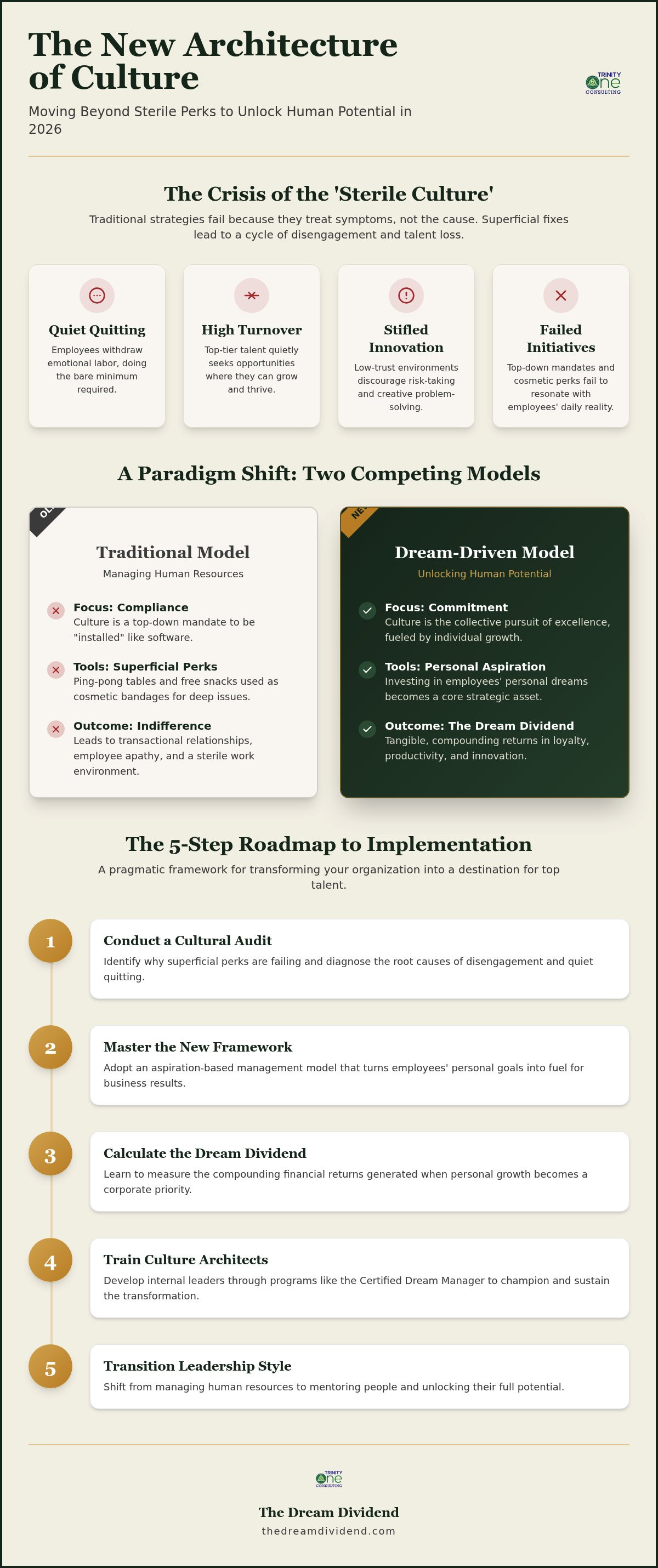
Traditional attempts at organizational culture transformation often treat people like line items on a balance sheet rather than the primary engine of growth. We see companies pouring capital into aesthetic upgrades, office amenities, and digital town halls, yet these investments frequently fail to yield a positive return on engagement. Ping-pong tables and free snacks were never a cure for quiet quitting; they were merely cosmetic bandages on a deeper structural wound. When the foundation is cracked, no amount of surface-level polish will stabilize the building.
Real transformation cannot be dictated through a corporate memo or a top-down mandate. If leadership believes culture is something that can be installed like a software update, they've already lost the battle. This fallacy creates a cavernous disconnect between the lofty values printed on the lobby wall and the actual lived experience of the front-line employee. When daily reality feels transactional, sterile, and disconnected from personal meaning, workers withdraw their emotional labor. They don't just stop working hard; they stop caring about the collective outcome.
The 2026 talent market has moved beyond the era of simple strategic alignment. Today's high-tier talent doesn't just want to fit into a system; they want to contribute to a purpose that resonates with their internal growth. They're looking for a workplace that functions as a structural foundation for their own success. Without this sense of personal investment, even the most sophisticated strategies will suffer from the friction of employee indifference.
The Crisis of the 'Sterile Culture'
A sterile culture is easy to spot. It manifests in low-trust environments where communication is guarded, innovation is stifled, and transactional management is the norm. You'll see the signs in high turnover rates, a lack of voluntary collaboration, and a general sense of apathy during meetings. Traditional change management often triggers resistance because it feels like an imposition rather than an invitation. These sterile environments carry a hidden cost that compounds over time, eroding loyalty and driving up the price of recruitment while depleting the organization's creative reserves.
Beyond Strategic Alignment: The Need for Soul
Think of your organization as a building. Structure and operations are the sturdy bones, but culture is the living spirit that inhabits the space. True leadership in 2026 requires a shift from managing tasks to mentoring people, where the focus moves from compliance to commitment. Culture is the collective pursuit of excellence. By moving toward a model of high-stakes mentorship, you create a workplace where individuals don't just work; they thrive, evolve, and contribute at their highest capacity. This isn't just a "nice to have" philosophy. It's a strategic imperative for any leader looking to build a sustainable, high-performance organizational culture transformation that actually lasts.
The Dream-Driven Paradigm: A New Framework for Cultural Evolution
A dream-driven culture is a strategic architecture where the organization's success is fueled by the achievement of its people's personal aspirations. It's an evolution from the traditional model of extracting value to one of compounding it. When a company invests in the whole person, they unlock a level of professional results that standard incentives simply can't touch. This is the essence of a modern organizational culture transformation. It moves the needle because it recognizes that an employee who is winning in life is far more likely to help your business win in the marketplace.
We call the result of this alignment the Dream Dividend. It's the tangible, financial return on employee personal growth. Just as capital compounds in a high-yield account, the loyalty and productivity of an employee compound when they see their workplace as the primary vehicle for their personal success. By using the 12 Life Characteristics as a blueprint, leaders can measure organizational health through the lens of human excellence. The ultimate KPI for any forward-thinking firm is no longer just a retention percentage; it's the measurable progress of your people becoming the best version of themselves.
The Mechanism of Aspiration-Based Management
Discretionary effort is the holy grail of management. It's that extra ounce of care, creativity, and commitment that money can't buy. To access it, leaders must adopt the Dream Manager framework, which bridges the gap between daily tasks and long-term desires. The psychological shift is profound. Employees stop working for a boss and start working for their own future. When their professional output directly funds their personal dreams, the "engagement gap" disappears, replaced by a high-stakes partnership where both parties are deeply invested in the outcome.
The Role of the DreamCompass in Transformation
The DreamCompass tool serves as the navigational heart of this cultural shift. It allows leadership to map the collective aspirations of the workforce, identifying a "Cultural North Star" that unites even the most diverse teams. By aligning organizational goals with these personal maps, companies create a bond that transcends the typical employment contract. Data from organizations implementing these principles shows that mapping and supporting employee dreams can reduce turnover by up to 40% by replacing transactional relationships with genuine growth partnerships. To begin mapping your own team's potential, you can explore the strategic insights at The Dream Dividend.
This paradigm shift requires courage and a willingness to look beyond the next quarter. It's about building a foundation that supports long-term growth rather than immediate, superficial fixes. When you stop managing resources and start mentoring people, you create a self-sustaining ecosystem of excellence. This is how you lead an organizational culture transformation that doesn't just change the rules, but changes the game entirely.
Comparing Transformation Models: Aspiration vs. Traditional Strategy
Traditional models of organizational culture transformation often rely on a compliance-based architecture. These frameworks attempt to mandate engagement through policy, performance metrics, and standardized protocols. While this structure might ensure a baseline of operational consistency, it rarely inspires the deep commitment required for a high-performance environment. In contrast, an aspiration-driven model shifts the focus from extracting labor to fostering a growth partnership. By moving from compliance to commitment, you transform the workplace from a site of transaction into a hub of shared success.
Whole person development is the only sustainable competitive advantage in 2026. In an era of rapid volatility, your most valuable asset isn't your technology or your intellectual property; it's the creative energy and loyalty of your people. When you transition from "retention strategies" to "growth partnerships," you stop trying to keep people from leaving and start giving them reasons to grow within your ecosystem. The cost of this investment is a fraction of the price paid for turnover. Replacing a single mid-level manager can cost an organization significant capital in lost productivity, recruitment fees, and cultural erosion, making the case for a more human-centric approach undeniable.
Transactional vs. Transformational Leadership
The manager of the future must evolve into a strategic mentor. Transactional leadership, which focuses solely on task completion and output, is no longer sufficient to maintain a competitive edge. To drive true transformation, leaders must master the art of the "aspiration review." Instead of simply auditing past performance, these sessions serve as a navigational tool to align professional goals with personal dreams. Utilizing the 12 Life Characteristics provides a holistic blueprint for this assessment, allowing leaders to support their teams in a way that is both deeply human and professionally rigorous. It's about helping people become the best version of themselves while they help the company do the same.
The Financial Case for Human-Centricity
Investing in the individual isn't just a moral choice; it's a pragmatic business strategy. Analyzing the Dream Manager ROI reveals a direct correlation between employee personal fulfillment and bottom-line profitability. When people feel their organization is a catalyst for their own success, the symptoms of quiet quitting vanish. Loyalty compounds. Innovation flourishes. Resilience strengthens. By treating personal aspirations as a vital asset, you reduce the friction of disengagement and build a culture that naturally attracts and retains the highest-tier talent in your industry. This shift doesn't just improve the atmosphere; it secures the financial future of the enterprise.
The 5-Step Roadmap to Implementing a Dream-Driven Culture
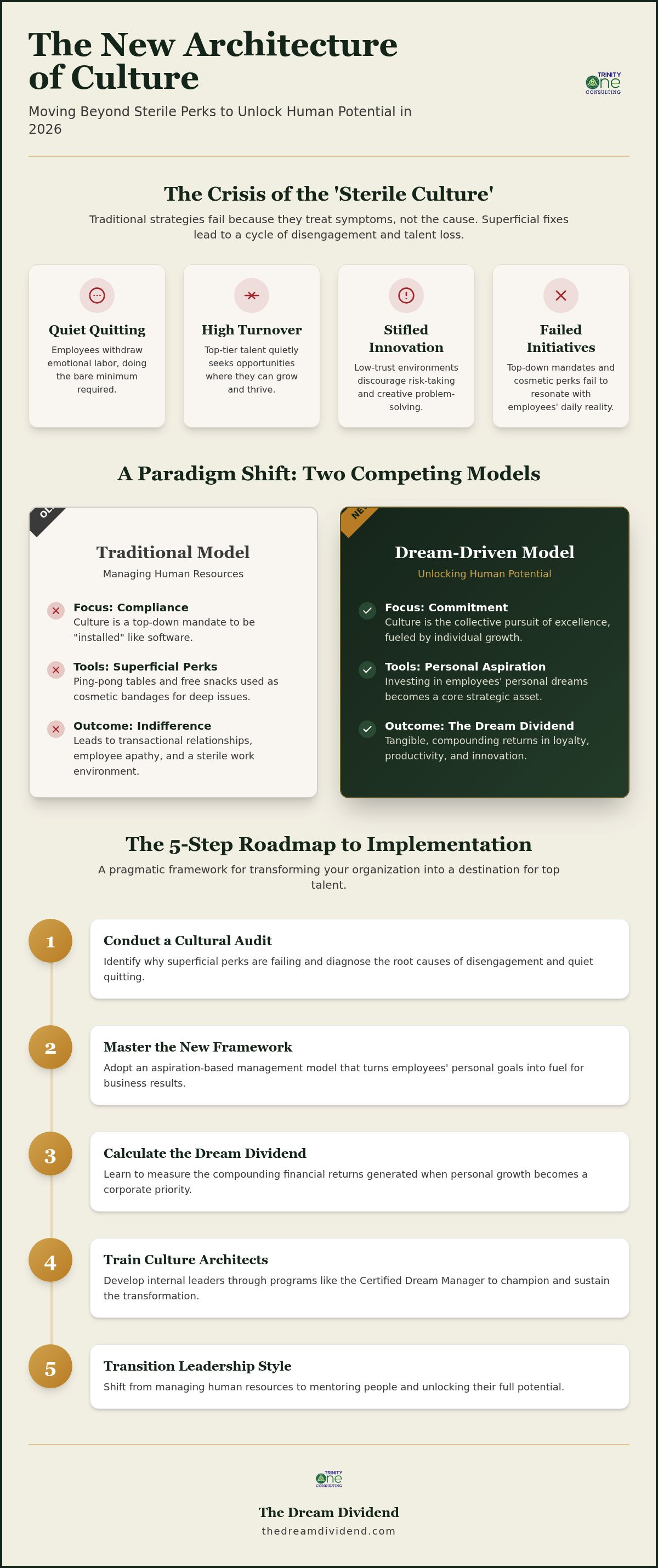
Executing a successful organizational culture transformation requires more than a shift in policy; it demands a shift in philosophy. To build a culture that drives itself, you must move from the abstract to the architectural. This roadmap provides the structural foundation needed to align individual aspirations with corporate objectives, turning your workforce into a community of high achievers who are personally invested in the collective outcome. It's a methodical process of identifying, aligning, and activating the latent potential within your teams.
- Step 1: The Cultural Audit. Begin by assessing the current state of engagement and aspiration. You can't navigate to a new destination without a clear understanding of your starting point.
- Step 2: Training the Architects. Implement the Certified Dream Manager program to equip your leaders with the mentoring skills required for this new paradigm. These architects will be the ones who build the bridges between dreams and daily tasks.
- Step 3: Deploying the DreamCompass. Use this specialized tool to map individual dreams to organizational growth. It provides a visual representation of how personal success fuels professional excellence.
- Step 4: Integration. Embed the 12 Life Characteristics into your daily operations. This ensures that the pursuit of excellence isn't just a monthly meeting topic, but a constant, lived reality.
- Step 5: Measurement. Track the Dream Dividend through retention, performance, and loyalty metrics. If you don't measure the return, you can't optimize the investment.
Phase 1: Awareness and Assessment
The first phase is about uncovering the "unspoken" culture. Conduct deep-dive interviews to understand what your people truly value and where the existing system is failing them. Use the 12 Life Characteristics to identify organizational blind spots that might be hindering performance or morale. This stage is about radical honesty; it's the only way to build a foundation of high-stakes trust. See how this works in our Dream Management Consulting guide.
Phase 2: Execution and Scaling
Once the foundation is set, you must scale the initiative without disrupting essential operations. Launch a Dream Manager program that integrates seamlessly into your existing workflows. Create a "culture of celebration" where personal milestones are recognized with the same fervor as professional ones. This creates a powerful feedback loop of loyalty and effort. Long-term sustainability is achieved through continuous mentorship, ensuring the momentum of your organizational culture transformation never stalls. Ready to begin your journey? Partner with our strategic architects today.
The Future of Leadership: Becoming the Architect of Transformation
Leadership in 2026 isn't about oversight; it's about architecture. We've moved past the era where managing resources was enough to sustain a competitive edge. To lead a truly successful organizational culture transformation, you must become an architect of human potential. This requires a fundamental shift in how we view the workforce. Your people aren't just assets to be managed; they're individuals with vibrant aspirations that, when unlocked, become the primary engine of your corporate growth. If you don't provide the space for them to grow, they'll eventually find an organization that does.
Every forward-thinking organization now needs a Certified Dream Manager to bridge the gap between corporate objectives and personal achievement. This role acts as a strategic navigator, helping employees align their daily professional contributions with their long-term personal dreams. When you unlock this latent potential, you create a self-sustaining culture of excellence. The "Becoming the Best Version of Yourself" framework provides the necessary blueprint for this ongoing evolution. It ensures that your cultural shift isn't just a seasonal initiative but a permanent maturation of the organization's soul.
Building a Legacy Culture
A leader's true legacy isn't found in a product line, a patent, or a quarterly report. It's found in the people they've helped build. When you invest in the Dream Dividend, the ripple effect extends far beyond the office walls. It impacts families, strengthens communities, and elevates the collective standard of excellence for everyone involved. This high-stakes mentorship creates a bond of loyalty that no traditional retention strategy can match. Culture is a living, breathing investment that yields compounding returns long after the initial strategy is implemented.
Next Steps for Visionary Leaders
The path to transformation begins with a single, bold decision to look beyond the status quo of transactional management. Start your journey with a Dream Management assessment to identify exactly where your organization stands and where the greatest potential for growth lies. For real-world stories and strategic insights from leaders who have successfully navigated this shift, listen to The Dream Dividend Podcast. If you're ready to lead this change personally, explore the path to becoming a Certified Dream Manager. Your organizational culture transformation starts the moment you decide to invest in the dreams of your team.
Architecting the Future of Your Organization
The journey toward a genuine organizational culture transformation requires more than just a change in policy; it demands a fundamental shift in how we value the human spirit. By moving beyond superficial perks and investing in the personal aspirations of your people, you create a workplace where excellence becomes the natural standard. You've seen how the Dream Manager framework provides a pragmatic roadmap to move from transactional management to high-stakes mentorship. When your team wins personally, your organization wins professionally. It's a strategic alignment that pays dividends for years to come.
This approach is based on the best-selling book by Matthew Kelly and offers a proven framework for reducing turnover while increasing engagement. Our Certified Dream Manager expertise ensures that your cultural evolution is grounded in real-world results rather than abstract theory. It's time to build a legacy that transcends the balance sheet and fosters the best version of every individual in your care. Transform your culture with Dream Management Consulting and start building the foundation for a thriving 2026. Your people are ready for a workplace that believes in their potential. We're ready to help you build it.
Frequently Asked Questions
What is organizational culture transformation in a modern context?
Modern organizational culture transformation is the strategic alignment of an organization's mission with the personal dreams of its people. It's a shift from viewing employees as replaceable resources to treating them as vital partners in a shared pursuit of excellence. This approach recognizes that when individuals thrive in their personal lives, they bring a higher level of creative energy and commitment to their professional roles. It moves the collective from extraction to compounding value.
How long does a typical culture transformation take to show ROI?
Most organizations begin to see a measurable return on investment within six to twelve months of implementation. While cultural shifts take time to mature, the Dream Dividend often manifests early through reduced turnover and increased discretionary effort. The financial impact of retaining even a few high-tier employees can quickly offset the initial costs of the program. It's an investment in compounding loyalty that secures the firm's structural health.
What is the difference between culture change and culture transformation?
Culture change is often a situational adjustment to external factors, whereas culture transformation is a deep, architectural evolution of the organization's soul. Change might involve new rules, revised branding, or tactical shifts. Transformation involves a fundamental shift in the "lived experience" of every team member. It moves the entire collective from a compliance-based mindset to a commitment-based partnership where everyone is personally invested in the outcome.
Can a mid-size company afford a Dream Manager program?
Mid-size companies can absolutely implement these programs, and they often see the most dramatic results due to their inherent agility. The investment is scalable and focuses on long-term value rather than immediate expense. By utilizing tools like the DreamCompass, smaller firms can compete with larger corporations for top-tier talent. They do this by offering a more human-centric growth environment that larger, more sterile organizations struggle to replicate.
How do you measure the success of a culture transformation?
Success is measured through a blend of financial metrics and humanistic benchmarks. You track the organizational culture transformation by analyzing retention rates, performance outcomes, and the progress individuals make toward their personal goals. When your people are becoming the best version of themselves, the organization naturally follows that same upward trajectory. This creates a data-driven narrative of growth that satisfies both the heart and the balance sheet.
What are the 12 Life Characteristics and how do they relate to work?
The 12 Life Characteristics are a holistic blueprint for excellence that includes physical, emotional, and spiritual well-being. They relate to work because a person whose life is in disarray cannot perform at their highest capacity. By supporting growth in these areas, leaders build a foundation of resilience and health. This structural stability directly fuels professional productivity and creativity, ensuring the employee has the energy to contribute their best work.
How can I start a culture transformation if my team is currently disengaged?
You start by conducting a cultural audit to identify the "unspoken" reasons for disengagement. Transformation begins with radical honesty and a willingness to acknowledge where the current system is failing. By introducing a framework that focuses on the employee's personal success first, you can begin to rebuild trust. This approach reignites the passion that quiet quitting extinguished by proving that the organization cares about the individual's future.
Is investing in employee dreams a distraction from business goals?
Investing in dreams isn't a distraction; it's the primary engine of high performance. When an employee sees their professional output as the vehicle for their personal aspirations, their work gains new meaning. This alignment creates a self-driving culture where people are motivated by their own future rather than just a corporate mandate. It turns a job into a growth partnership, which is the most sustainable way to achieve aggressive business goals.