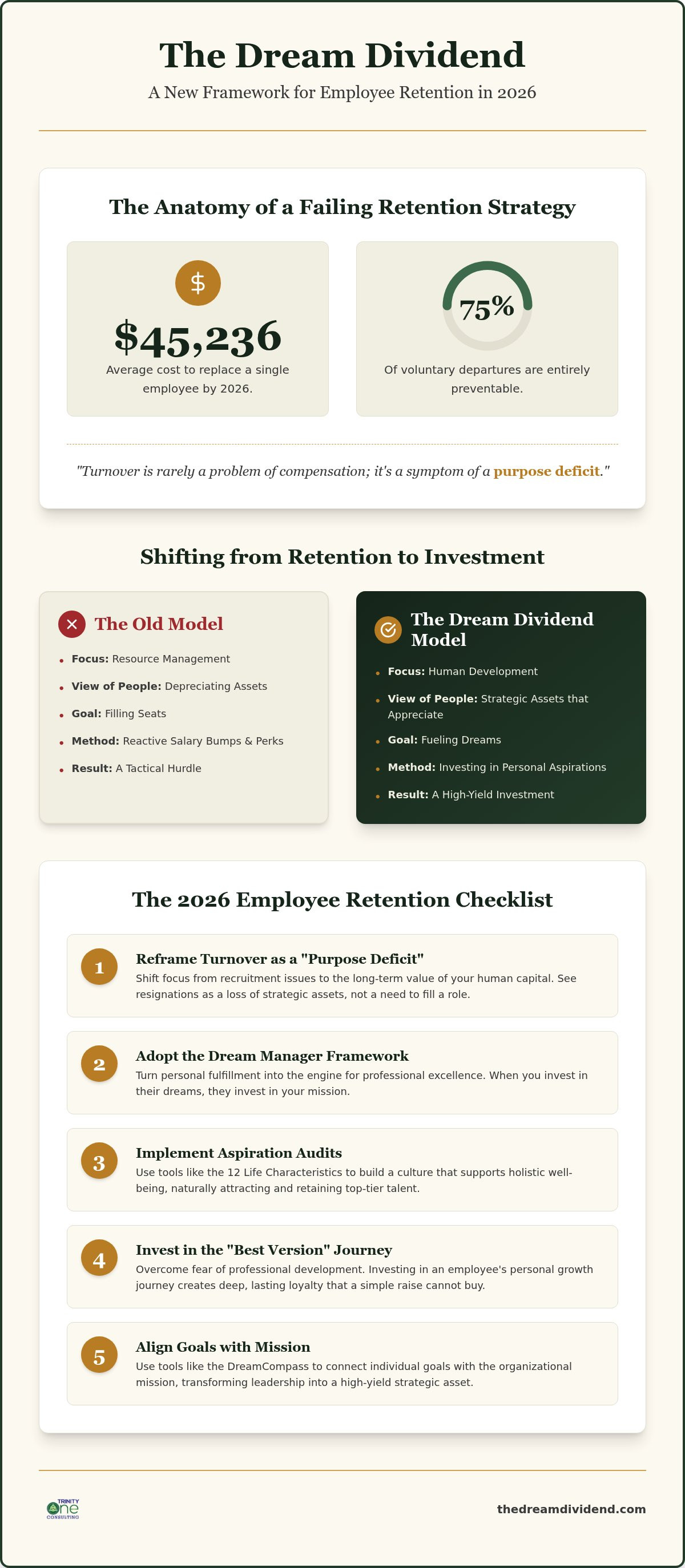
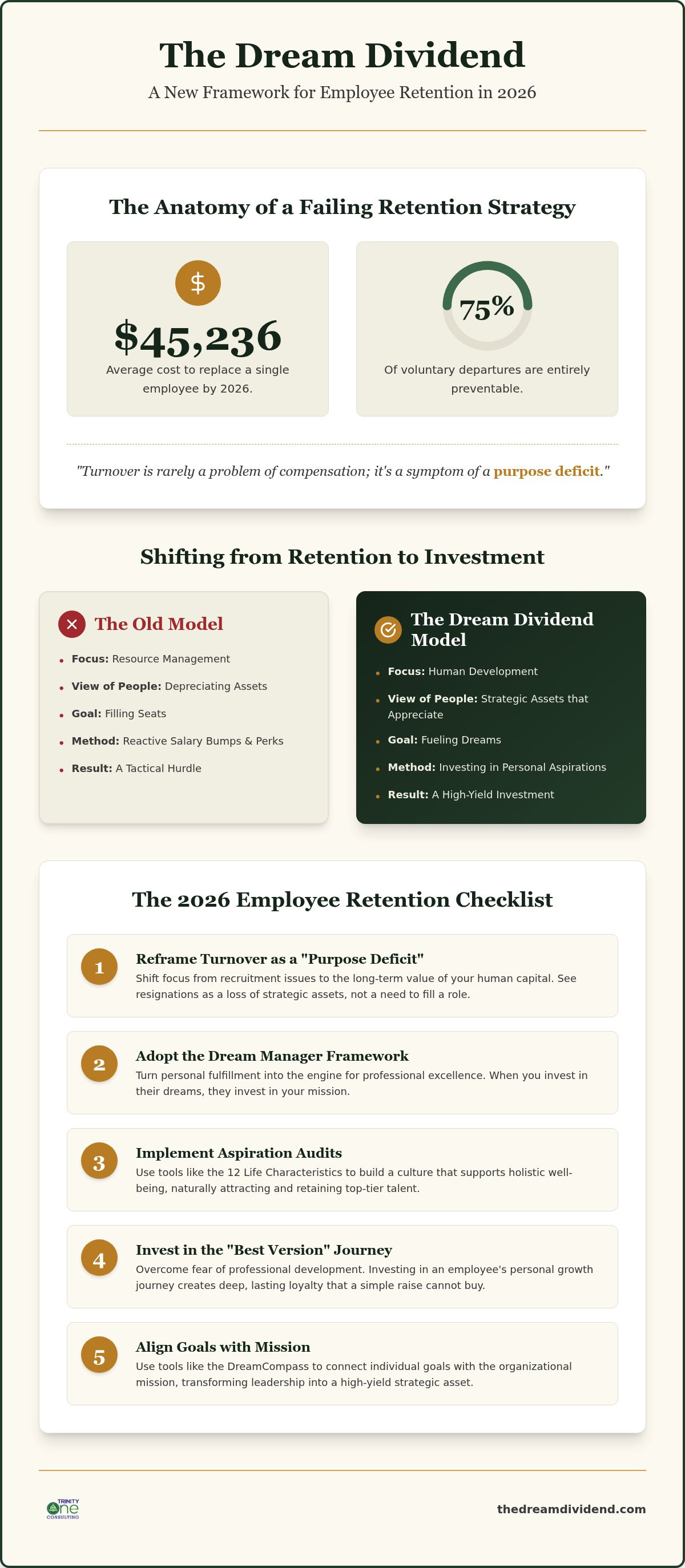
With the average cost to replace a single employee reaching $45,236 in 2026, the traditional approach to retention is no longer just inadequate; it's a structural failure. While many leaders are still scrambling to figure out how to reduce employee turnover through superficial perks or reactive salary bumps, the reality is that 75% of voluntary departures are entirely preventable. You've likely felt the weight of rising recruitment costs, the drain of constant team churn, and the frustration of engagement surveys that fail to spark real change. It's time to stop playing defense.
We believe that true retention is not a tactical hurdle but a high-yield investment in your people's personal aspirations. When you shift your focus from merely filling seats to fueling dreams, you create a compounding effect of loyalty and performance. This article will show you how to transform your retention strategy into a visionary framework for growth. We'll provide a strategic 2026 checklist designed to help you build a loyal workforce, cultivate a culture that attracts top talent naturally, and secure a measurable return on your human capital investment.
Key Takeaways
- Reframe turnover as a "purpose deficit" rather than a recruitment issue, shifting your focus toward the long-term value of your human capital.
- Learn how to reduce employee turnover by adopting the Dream Manager framework, where personal fulfillment becomes the engine for professional excellence.
- Implement Aspiration Audits and the 12 Life Characteristics to design a cultural architecture that naturally attracts and retains top-tier talent.
- Overcome the fear of professional development by understanding how investing in an employee’s "Best Version of Yourself" journey creates deep, lasting loyalty.
- Utilize tools like the DreamCompass to align individual goals with organizational mission, transforming your leadership into a high-yield strategic asset.
Table of Contents
The Hidden Anatomy of Employee Turnover in 2026
Employee turnover is rarely a problem of compensation; it's a symptom of a purpose deficit. When a talented individual leaves your organization, they aren't just walking away from a job description. They are signaling a lack of alignment between their personal aspirations and your corporate mission. A foundational step in understanding employee turnover is recognizing that a resignation is a capital loss that ripples through the entire team. Solving the puzzle of how to reduce employee turnover requires you to stop viewing people as replaceable units and start seeing them as strategic assets that appreciate over time.
The 2026 environment has fundamentally shifted the nature of workplace dissatisfaction. While the previous era was defined by quiet quitting, we've entered the age of vocal disengagement. Employees are no longer retreating into the shadows; they are actively and publicly critiquing cultures that fail to offer meaning. If your leadership remains focused on immediate, superficial fixes, you'll continue to lose your best people to organizations that treat human potential as a primary investment rather than a line-item expense.
Calculating the Real ROI of Retention
The true cost of a resignation far exceeds the $45,236 average replacement fee. It includes lost institutional knowledge, fractured team momentum, and a direct hit to your bottom line. Long-term employees represent compounding interest on your initial training investment. Their deep understanding of your systems and clients creates a level of efficiency that a new hire cannot replicate for months. You must also account for the engagement gap, which is the vast, silent space between showing up for a paycheck and actually contributing to the mission. The Dream Dividend is the surplus value created by a fully engaged workforce.
Why Traditional Benefits Are No Longer Enough
Competitive salaries and standard health plans are now merely table stakes. In 2026, the differentiator is how well you facilitate work-life integration. Top talent is looking for a cultural architecture that supports their holistic well-being, often through frameworks like the 12 Life Characteristics. This leads many leaders to ask the primary objection: "Why should I care about my employees' personal lives?"
The answer is pragmatic: you cannot have a high-performing employee if the person behind the desk is struggling with unfulfilled dreams or personal chaos. When you invest in their personal growth, you aren't just being altruistic; you're securing their professional loyalty. This shift in perspective is the most effective strategy for how to reduce employee turnover in a competitive market. It transforms your management style from a defensive tactic into a visionary commitment to excellence, growth, and long-term stability.
The Dream Dividend Framework: Shifting from Retention to Investment
Traditional human resources often treats employees as depreciating assets to be managed. This "Resource Management" mindset is fundamentally limited because it ignores the inherent potential of the individual. To understand how to reduce employee turnover effectively, you must pivot toward a philosophy of Human Development. When you adopt the "Best Version of Yourself" framework, you stop trying to keep people from leaving and start helping them grow. This creates a powerful psychological contract. If you invest in their personal dreams, they'll invest in your organizational mission.
The catalyst for this transformation is the Dream Manager. This isn't just a new job title; it's a strategic shift in how your organization views its people. Through Dream Management Consulting, leaders learn to build a culture where mutual growth is the standard. It’s about building a foundation of trust, clarity, and shared purpose. By treating human potential as a primary asset, you create a culture that naturally attracts and retains the best talent in the market.
The Manager as Life Coach
Leadership in 2026 has evolved beyond the outdated command and control model. Modern leaders must act as strategic architects who coach, inspire, and mentor. When a manager understands the personal aspirations of their direct reports, they can align daily tasks with long-term desires. This high-stakes mentorship directly counters the root causes of voluntary turnover. If employees feel their personal trajectory is supported by their employer, they have no reason to look elsewhere. They become loyal partners in your success. They don't just show up; they contribute with a sense of ownership and vitality.
Mapping Personal Dreams to Professional Goals
The Dream Manager framework provides a rigorous, strategic guide to organizational excellence. It uses the DreamCompass tool to map an individual's personal goals onto their professional responsibilities. This alignment is rooted in the 12 Life Characteristics, which serve as a blueprint for holistic success. By tracking these metrics, you ensure that every team member is moving toward their best self. This structured approach is a proven method for how to reduce employee turnover by creating a workplace that functions as a vehicle for personal fulfillment. If you're ready to see how this framework can stabilize your workforce, you might explore how our Dream Management Consulting services can architect this change for your team.
The 2026 Employee Retention Checklist: 5 Strategic Pillars
To build a resilient organization, you need a structural blueprint that prioritizes the individual as a vital asset. This isn't about generic perks. It's about building a foundation where personal fulfillment and professional performance are inextricably linked. If you're searching for how to reduce employee turnover, you must implement a framework that treats human potential with the same rigor as financial capital. Our 2026 checklist is built on five strategic pillars designed to transform your culture from the ground up.
- Pillar 1: Aspiration Audits. Systematically identify what your people truly want to achieve in their lives beyond their job descriptions.
- Pillar 2: Cultural Architecture. Design a workplace that reflects the 12 Life Characteristics, ensuring your environment supports holistic excellence.
- Pillar 3: Growth Infrastructure. Move beyond traditional skill training and invest in transformative learning that helps employees become the best version of themselves.
- Pillar 4: Recognition and Reward. Celebrate the attainment of personal milestones, such as buying a first home or finishing a marathon, with the same intensity as hitting quarterly KPIs.
- Pillar 5: Leadership Certification. Ensure every manager is equipped with the tools and mindset of a Certified Dream Manager to lead with empathy and strategic foresight.
Executing the Aspiration Audit
The Aspiration Audit begins with "Dream Conversations." These aren't standard performance reviews. They're high-trust dialogues where managers act as mentors to uncover an employee's true motivations. By creating a space of psychological safety and privacy, you allow individuals to share their deepest goals without fear of judgment. You can then use the data from these audits to tailor your retention strategies across different demographics. When you know exactly what your people are striving for, you can align your organizational resources to help them get there. This level of personalization is the ultimate answer to how to reduce employee turnover in a competitive landscape.
Building Growth Infrastructure
Sustainable retention requires a shift from annual reviews to quarterly "Best Version" check-ins. These sessions focus on personal progress, emotional health, and professional trajectory. To scale these initiatives effectively, many organizations leverage the Dream Manager program to provide a consistent roadmap for growth. Aspiration-Based Management is the future of human resources because it recognizes that a person who is winning at life will inevitably win at work. By investing in the infrastructure of human potential, you secure the long-term loyalty and vitality of your entire workforce.
Overcoming the Obstacles to Aspiration-Based Management
Implementing a revolutionary leadership model isn't without its points of friction. Leaders often face internal resistance when shifting away from traditional, resource-based management toward a human-centric approach. If you want to master how to reduce employee turnover, you must first dismantle the structural myths that keep your organization stuck in a defensive posture. This requires a bold commitment to the long-term potential of your people, even when the status quo feels safer. By addressing these obstacles head-on, you transform your culture from a place of stagnation into a hub of vitality, growth, and shared success.
The 'Train to Leave' Myth
One of the most persistent fears in executive leadership is the idea that by helping employees achieve their personal dreams, you're simply preparing them for their next employer. This logic is fundamentally flawed. People don't leave because they're growing; they leave because they've hit a ceiling. Stagnation is the primary driver of exit interviews. When you invest in an individual's personal life, you create an unbreakable bond of loyalty that a higher salary elsewhere can't easily sever. The Dream Manager ROI demonstrates that this human-focused investment yields compounding returns in the form of higher engagement and reduced churn. You aren't training them to leave; you're giving them every reason to stay and thrive.
Resistance also comes from managers who worry about overstepping professional boundaries. It's essential to understand that a Dream Manager isn't a therapist or a financial advisor. They are a strategic architect who uses the 12 Life Characteristics as a structural foundation for growth. By focusing on these clear, objective categories, leaders can support personal aspirations while maintaining a professional distance. This balance ensures that the relationship remains focused on the individual’s "Best Version of Yourself" journey without compromising the integrity of the workplace environment.
Scaling Culture Transformation
Scaling this framework across a large, diverse organization requires a methodical roadmap. It begins with a pilot program but must eventually move toward an enterprise-wide culture shift. To maintain momentum, you need a Certified Dream Manager within every department to act as a catalyst for change. These leaders ensure that the philosophy is integrated into everyday operational rhythms rather than being treated as a one-off initiative. When Aspiration-Based Management becomes the standard, the question of how to reduce employee turnover shifts from a problem to be solved to a dividend to be enjoyed. If you're ready to architect a more resilient team, consider how The Dream Dividend can help you scale these human-centric strategies across your entire organization.
Next Steps: Becoming a Dream-Driven Organization
Transforming your organization into a dream-driven culture is a methodical process of architectural redesign. It requires a transition from visionary theory to tangible implementation. If you're committed to mastering how to reduce employee turnover, you must treat this shift as a high-stakes investment in your most valuable asset: your human capital. This is not a superficial fix; it's a structural evolution that yields compounding results over time. To move from disengagement to vitality, follow this strategic roadmap.
- Step 1: Conduct a Culture Assessment. Use the DreamCompass principles to identify the current alignment between your team's personal aspirations and the company's mission.
- Step 2: Invest in Leadership Mastery. Enroll your key leadership in the Certified Dream Manager program to equip them with the tools of a strategic mentor.
- Step 3: Launch a Pilot Project. Initiate your first "Dream Dividend" pilot with a specific team to demonstrate the immediate impact of aspiration-based management.
- Step 4: Audit the Results. Measure the impact on engagement, productivity, and retention over a 12-month period to secure a clear ROI.
- Step 5: Refine and Scale. Use real-world employee feedback to refine the program before expanding it across the entire organization.
Starting the Conversation
Introducing a human-centric framework to an executive board requires a sophisticated balance of empathy and hard business strategy. Focus on the "Dream Dividend"; the measurable surplus value generated when employees are fully aligned with their work. Identify the early adopters in your management team who already lean toward a coaching style. Craft an internal communication plan that generates buy-in, excitement, and clarity. When the board begins to view retention as a strategic asset rather than a line-item expense, the path to cultural transformation becomes clear and compelling.
The Path to Certification
The most sustainable way to scale this culture is through internal mastery. While external consulting provides the initial spark and navigation, an in-house Certified Dream Manager ensures the momentum continues to compound. They act as the strategic architect of your culture, navigating the complexities of human development with professional rigor and compassionate guidance. This role balances the need for a proven framework with the specific nuances of your internal leadership. If you're ready to secure a loyal workforce and master how to reduce employee turnover for the long term, Learn more about our Certified Dream Manager program.
Architecting a Culture of Sustainable Growth
The blueprint for a resilient organization in 2026 is no longer built on superficial perks, defensive HR tactics, or reactive salary bumps. It's built on a radical commitment to the potential of every individual. By reframing churn as a purpose deficit and implementing a structural checklist for growth, you move from managing resources to mentoring people. This shift doesn't just stabilize your workforce; it creates a compounding dividend of loyalty, performance, and vitality. Understanding how to reduce employee turnover is ultimately about recognizing that a person who is winning at life will inevitably be a person who wins at work.
If you're ready to move beyond immediate fixes, it's time to invest in a proven methodology. Our proprietary approach, refined over years of successful implementation, has helped industry leaders slash turnover and boost engagement. Guided by our expert facilitators, we provide the strategic navigation needed to turn your culture into a high-yield asset. Transform your culture with The Dream Dividend's strategic growth program. Your team's personal aspirations are the most powerful engine for your organization's long-term success.
Frequently Asked Questions
How exactly does helping employees with personal dreams reduce turnover?
Helping employees with their personal dreams creates a profound psychological contract that transcends the standard paycheck. When an individual realizes that their employer is the primary vehicle for achieving their life goals, they develop a deep, structural loyalty. This shift is a key strategy for how to reduce employee turnover because it transforms the workplace from a temporary stop into a long-term partnership. It aligns individual growth with organizational success.
Isn't it risky to encourage employees to pursue dreams that might take them away from the company?
The greatest risk isn't that your people will grow and leave; it's that they will stagnate and stay. While some dreams may eventually lead an employee to a new path, the culture of growth you build will attract high-performers at a much higher rate. You'll find that employees stay longer and contribute more intensely when they feel supported. This investment creates a reputation that naturally attracts elite talent to your organization.
What is the typical ROI on a Dream Manager program for a mid-sized company?
The ROI on a Dream Manager program is measured through the lens of avoided capital loss and increased productivity. By slashing voluntary turnover, mid-sized firms save tens of thousands in recruitment and training costs per employee. Beyond these savings, you'll see a compounding return in the form of higher engagement, better customer service, and increased innovation. It's a strategic move that turns a defensive HR expense into a high-yield investment in human potential.
How do the 12 Life Characteristics relate to professional performance?
The 12 Life Characteristics provide a blueprint for holistic excellence that directly impacts professional output. A person who is physically vibrant, emotionally stable, and financially secure is naturally more capable of high-level performance. When you help an employee architect a better life, you are simultaneously building a more resilient and focused professional. This structural foundation ensures that your team has the energy and clarity required to meet your organization’s most ambitious goals.
Can a Dream Manager program work for remote or hybrid teams?
A Dream Manager program is particularly effective for remote and hybrid teams where cultural cohesion is often difficult to maintain. By focusing on personal aspirations, you bridge the physical distance with human connection and shared purpose. You can use tools like the DreamCompass to facilitate meaningful check-ins that go beyond task management. This approach ensures that every team member feels seen, valued, and integrated into the culture, regardless of their physical location.
What is the first step a manager should take to stop someone from quitting today?
The most immediate step a manager can take is to conduct an honest, high-trust conversation focused on the employee's future. Stop talking about KPIs and start asking about their personal aspirations. If you can identify a specific way the company can help them achieve a personal goal, you may be able to pivot their perspective on staying. This is a tactical first step in learning how to reduce employee turnover through empathy and strategic alignment.
How do we measure the success of a culture transformation strategy?
Success is measured through a combination of quantitative retention metrics and qualitative cultural shifts. You should track voluntary turnover rates, recruitment costs, and internal promotion percentages over a 12-month period. Additionally, use the DreamCompass tool to monitor individual progress toward personal and professional goals. When you see a measurable increase in employee fulfillment and a decrease in team churn, you've successfully architected a dream-driven organization that yields long-term value.
How much time does a manager need to dedicate to being a Dream Manager each week?
Becoming a Dream Manager is less about adding hours to your schedule and more about shifting your leadership style. While it requires dedicated time for monthly or quarterly conversations, the core of the framework is integrated into your daily interactions. Most managers find that by investing about one to two hours per month per direct report, they save dozens of hours previously lost to conflict, disengagement, and the exhausting cycle of constant recruitment.